
Stochastic Geomorphological Transport for Terrain Erosion Simulation
Transactions on Graphics (Proceedings of SIGGRAPH 2026)
SIGGRAPH 2026 Technical Papers Awards, Honorable Mention
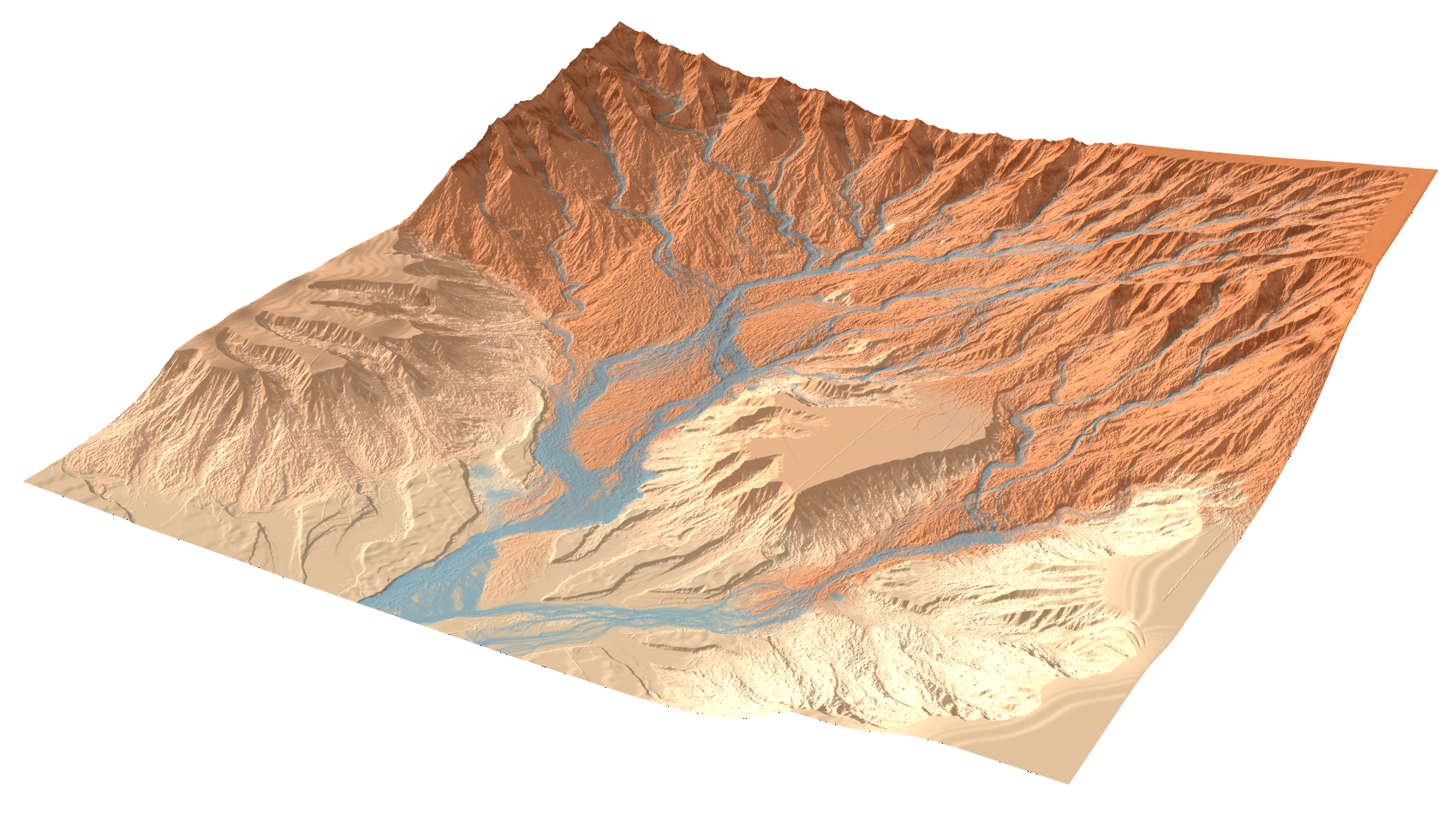
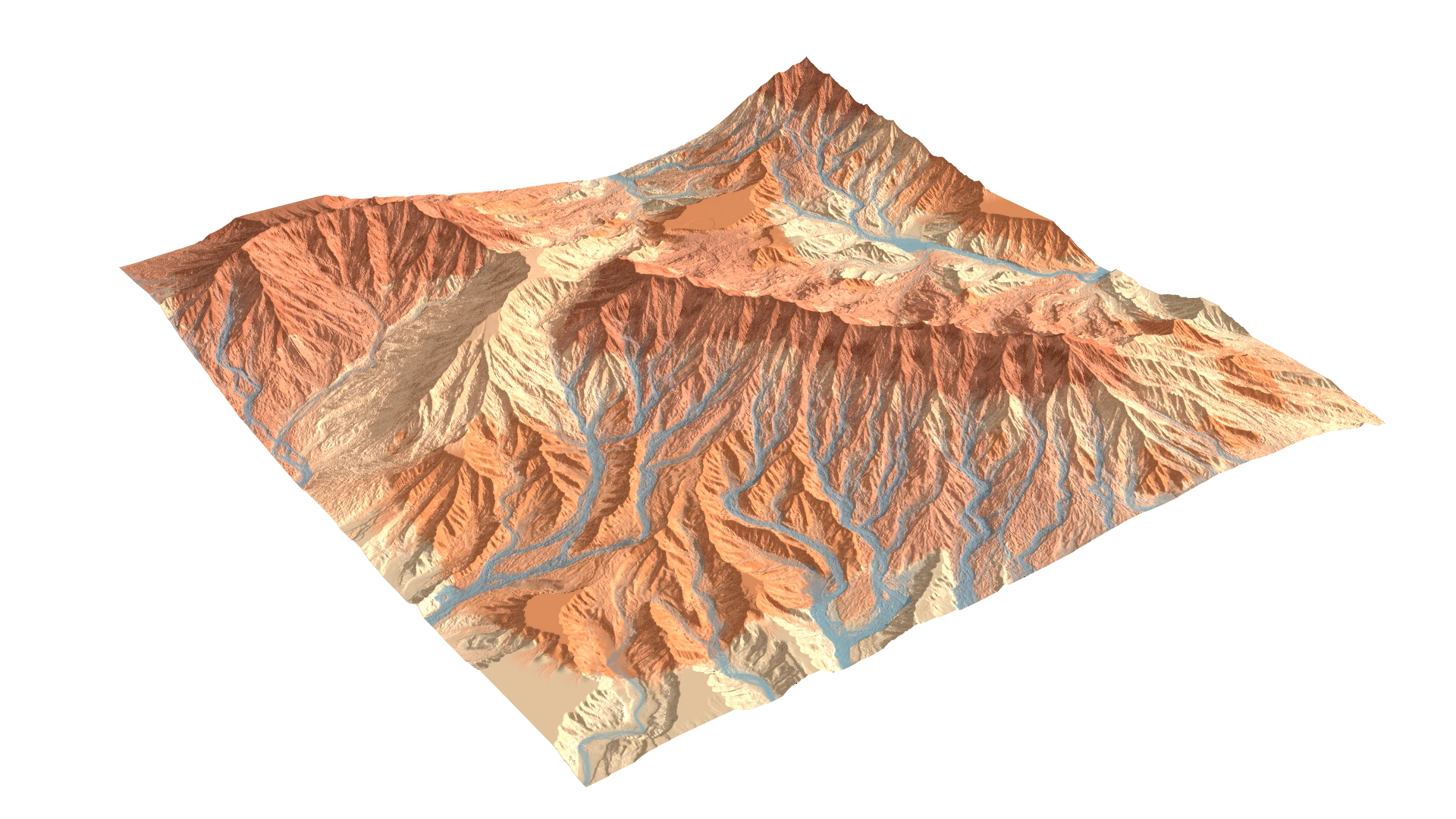
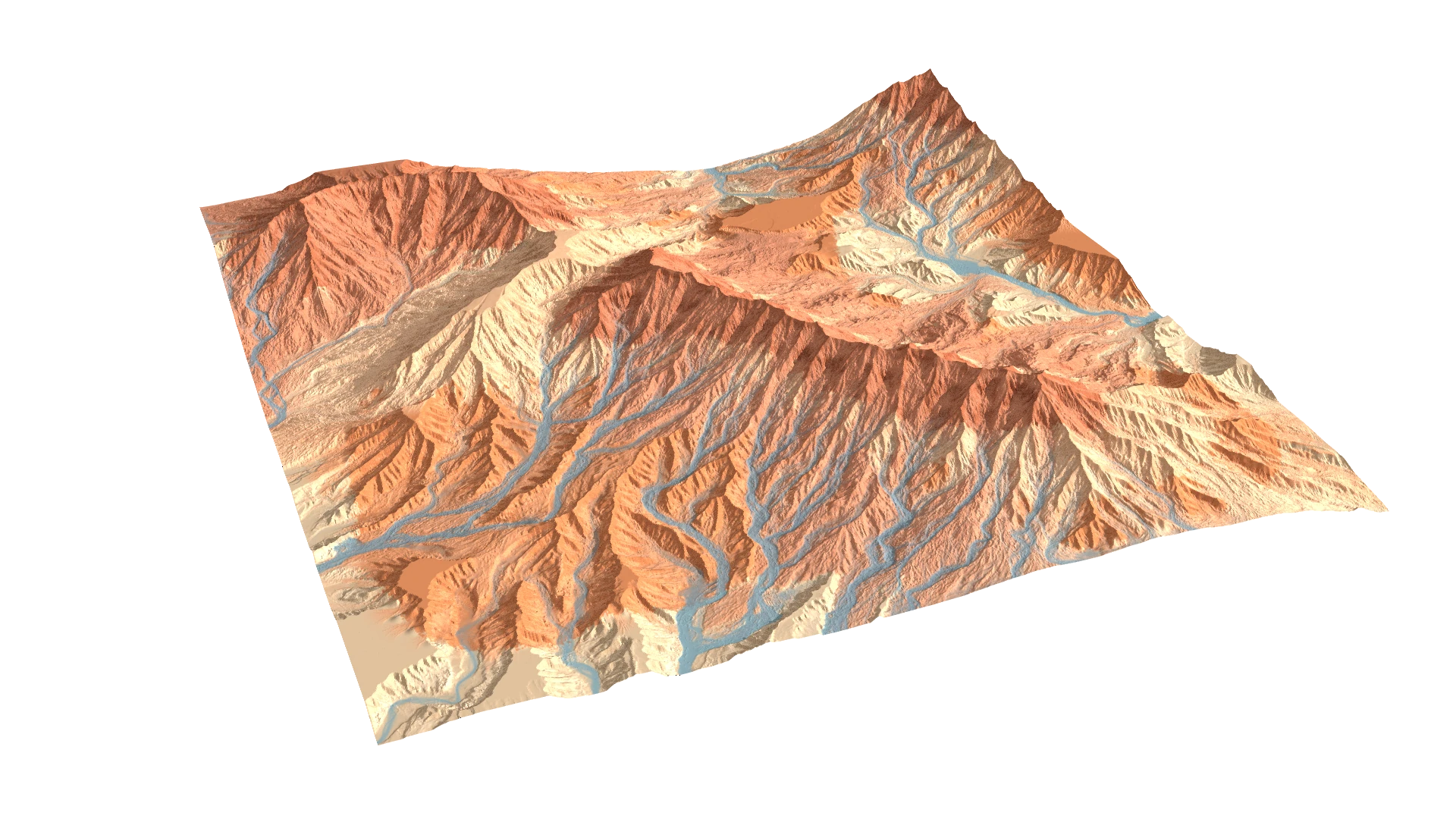
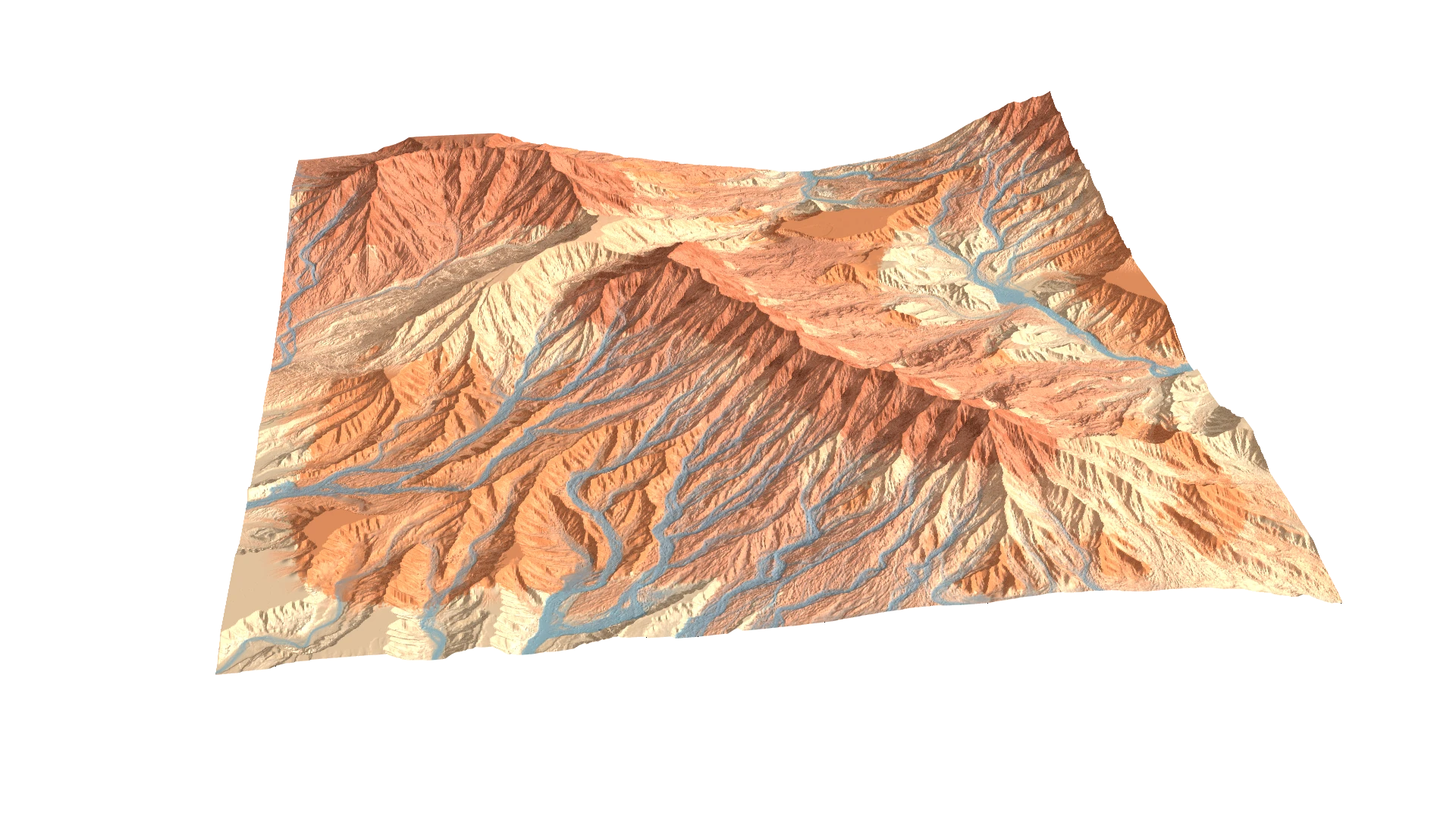
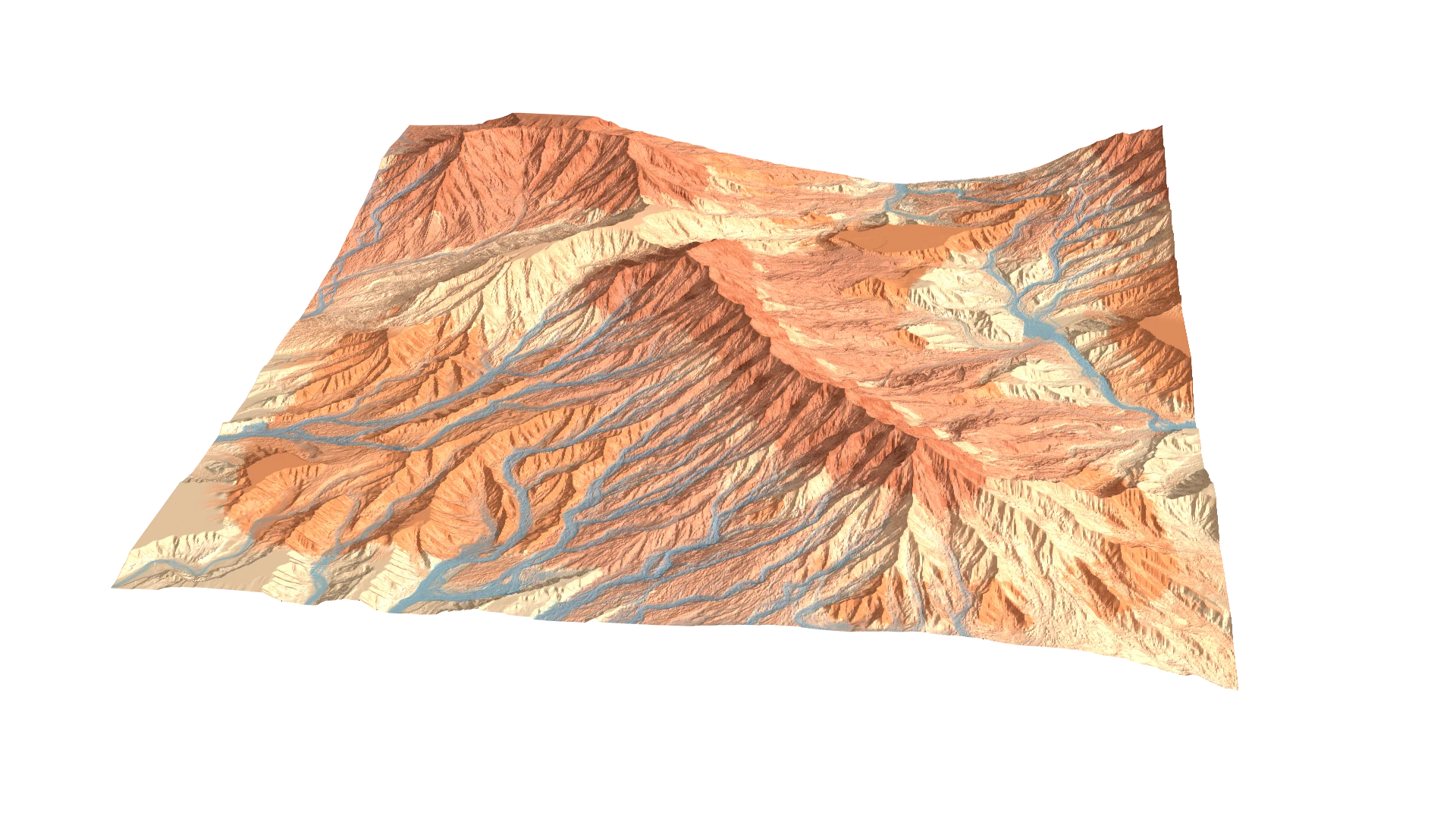
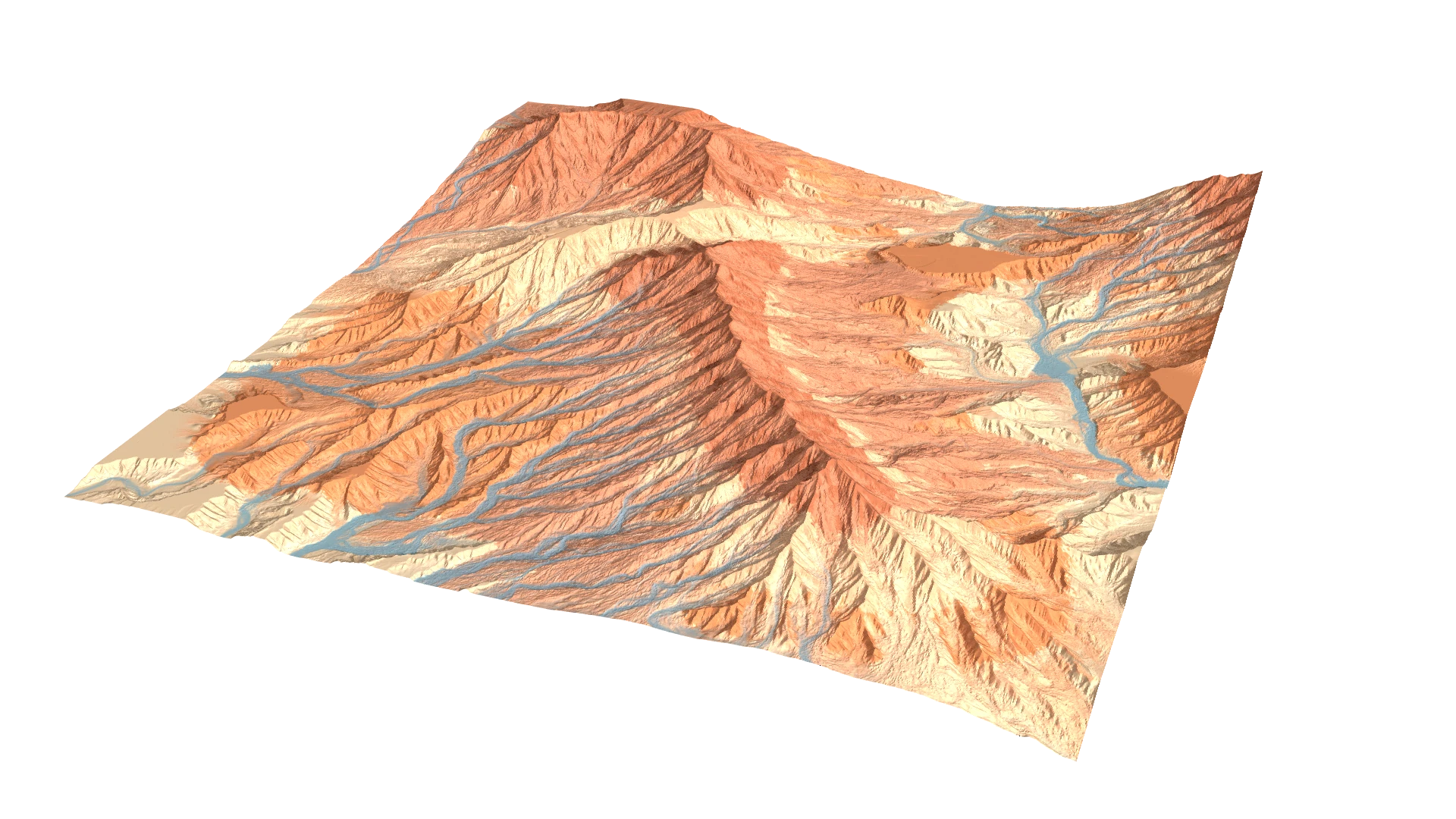
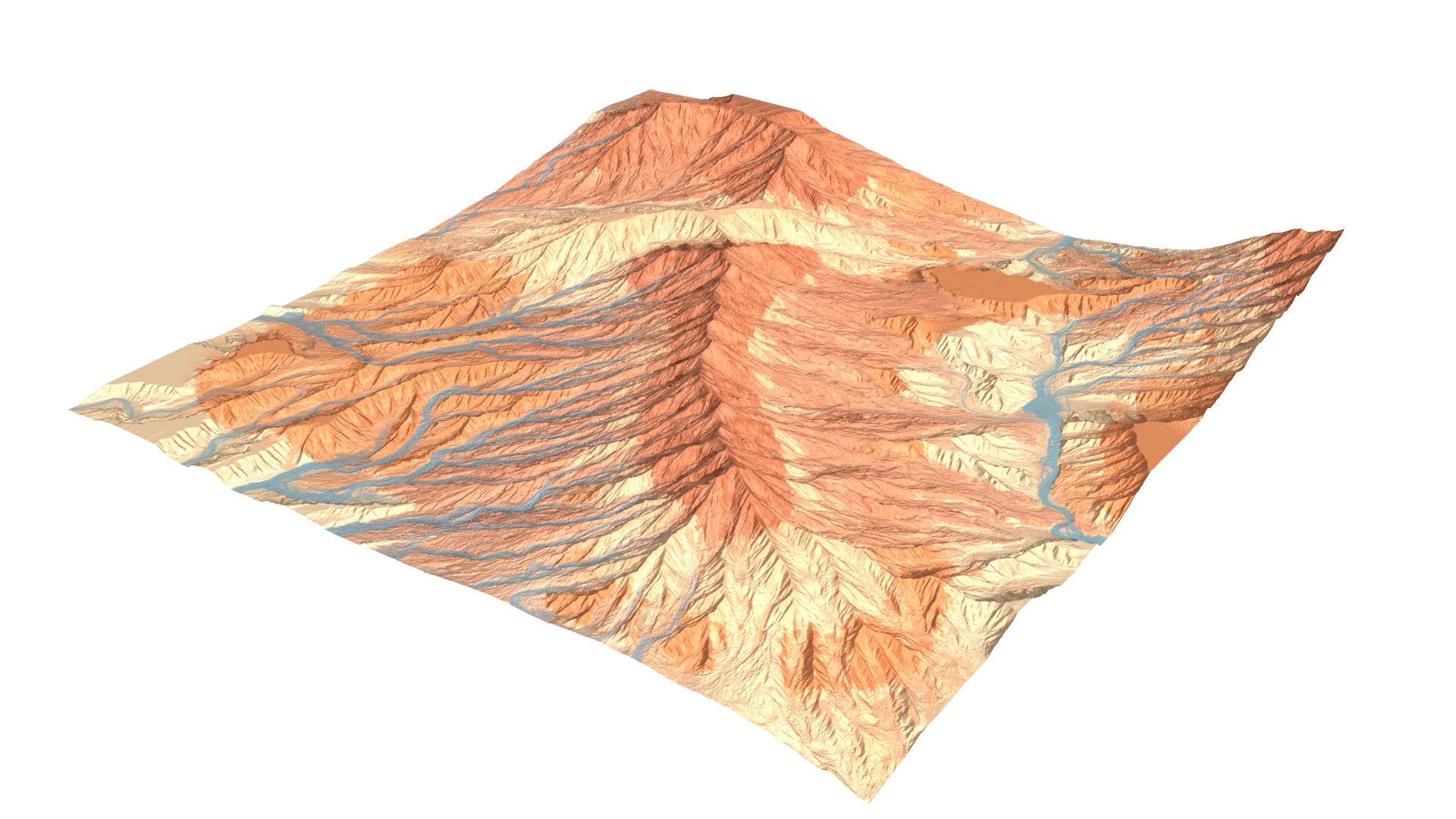
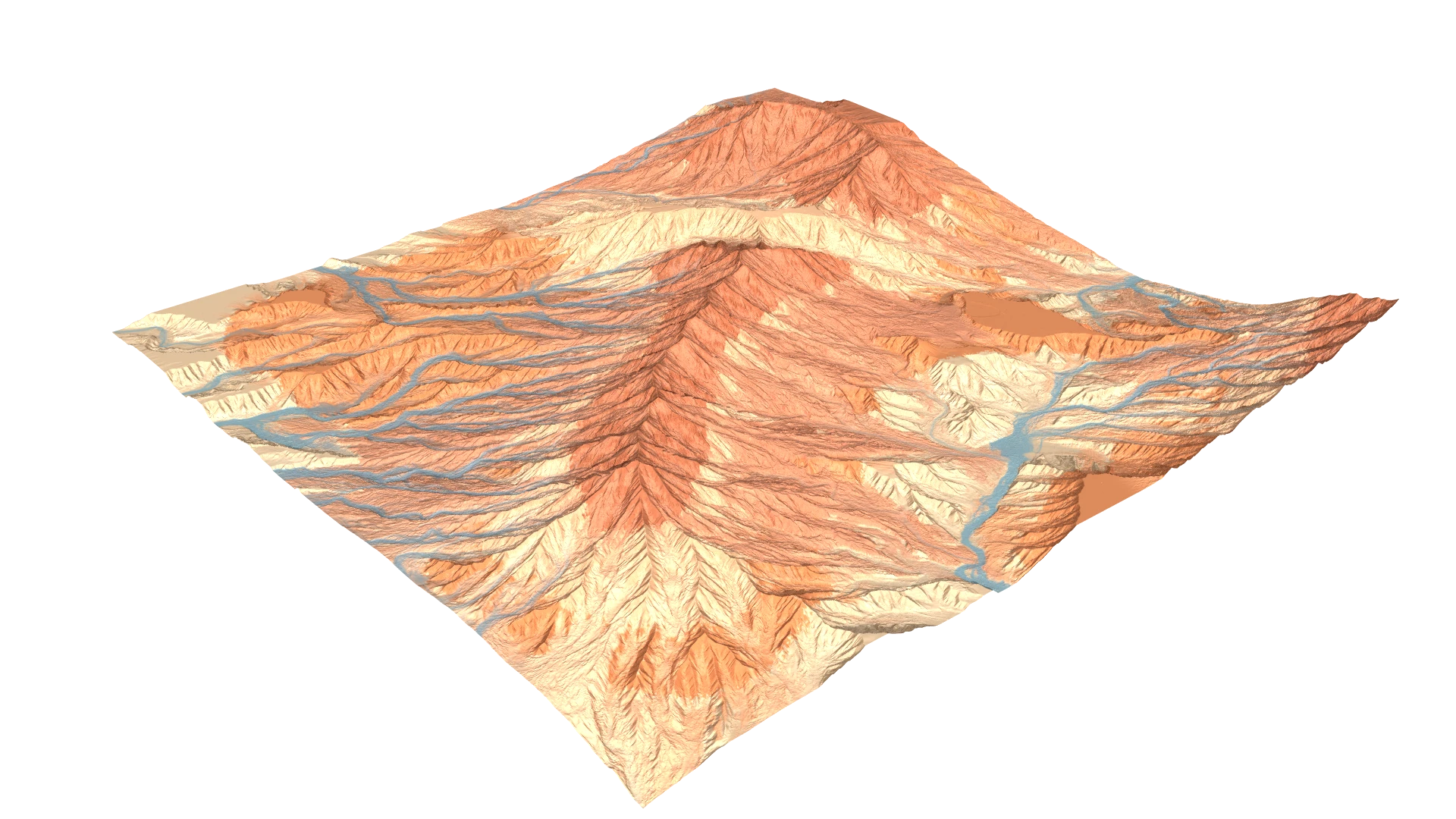
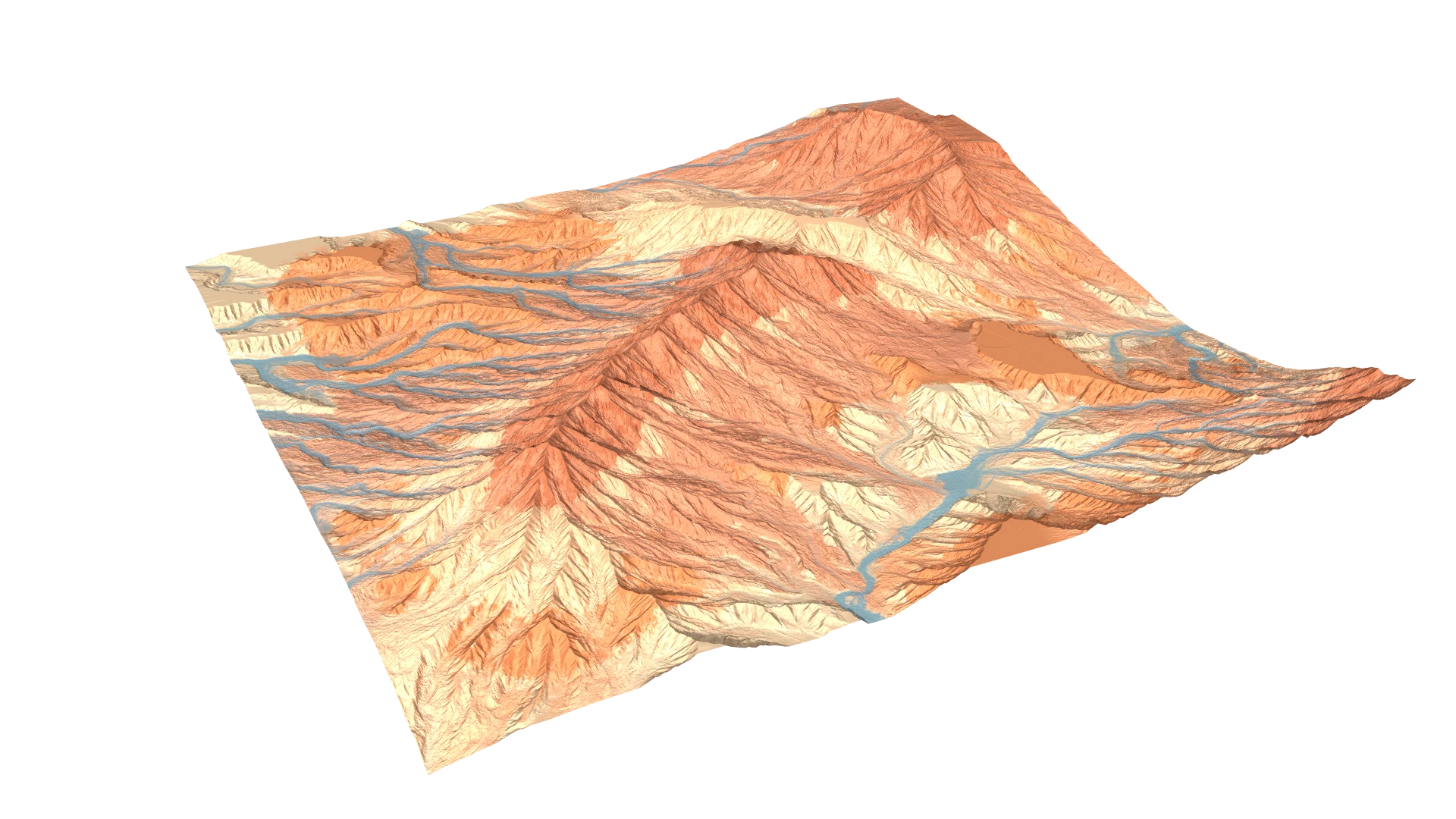
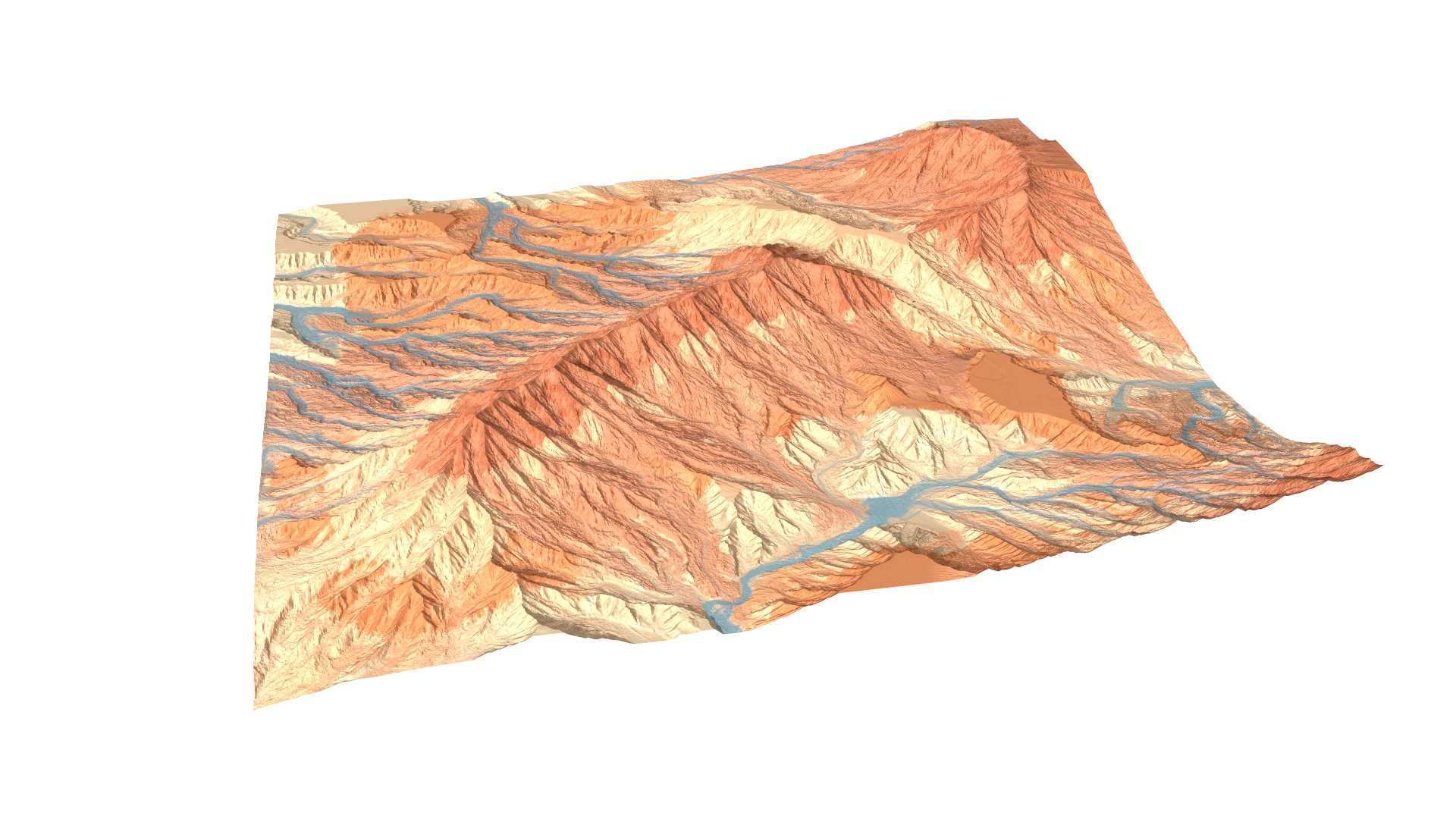
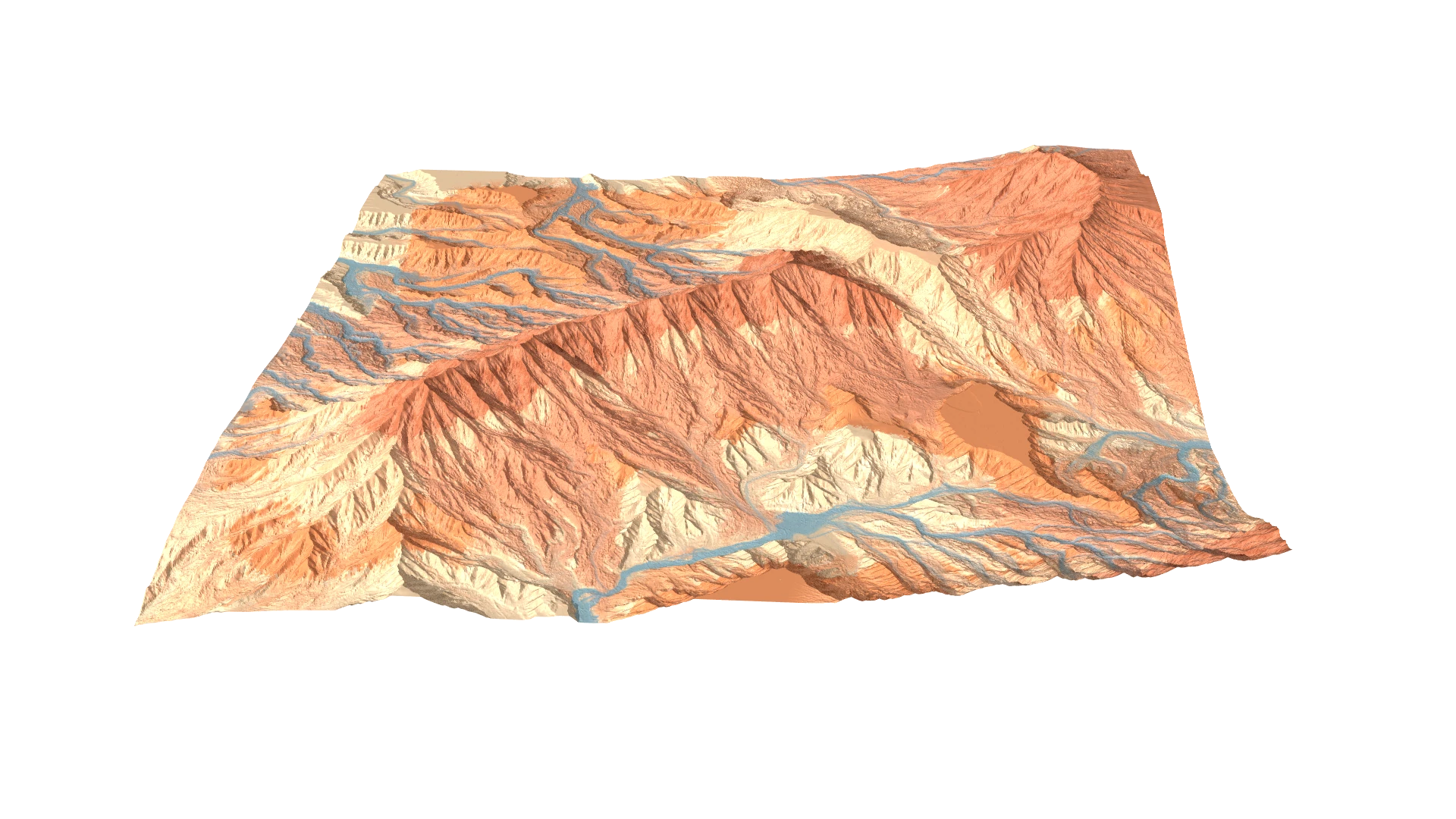
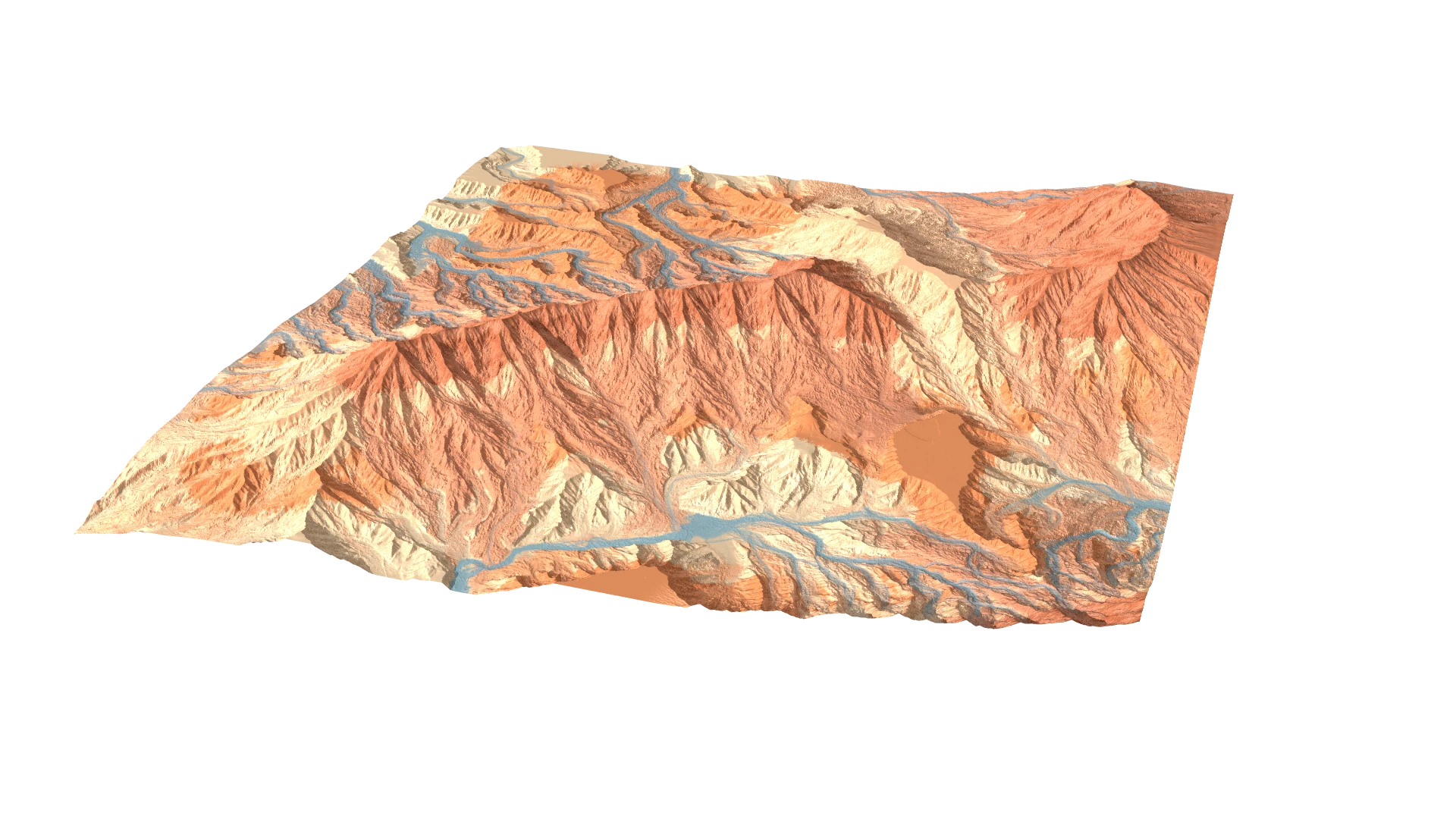
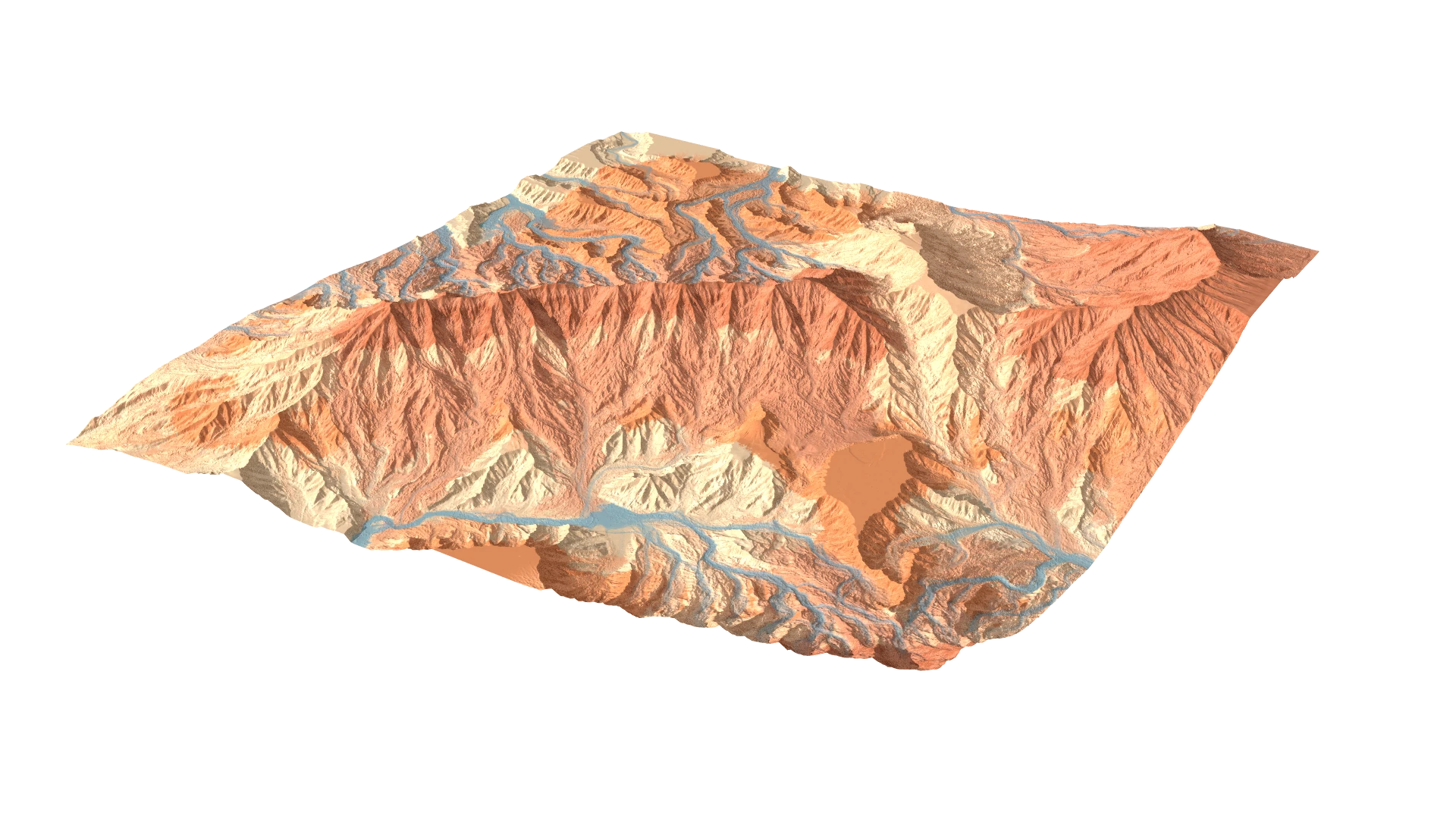
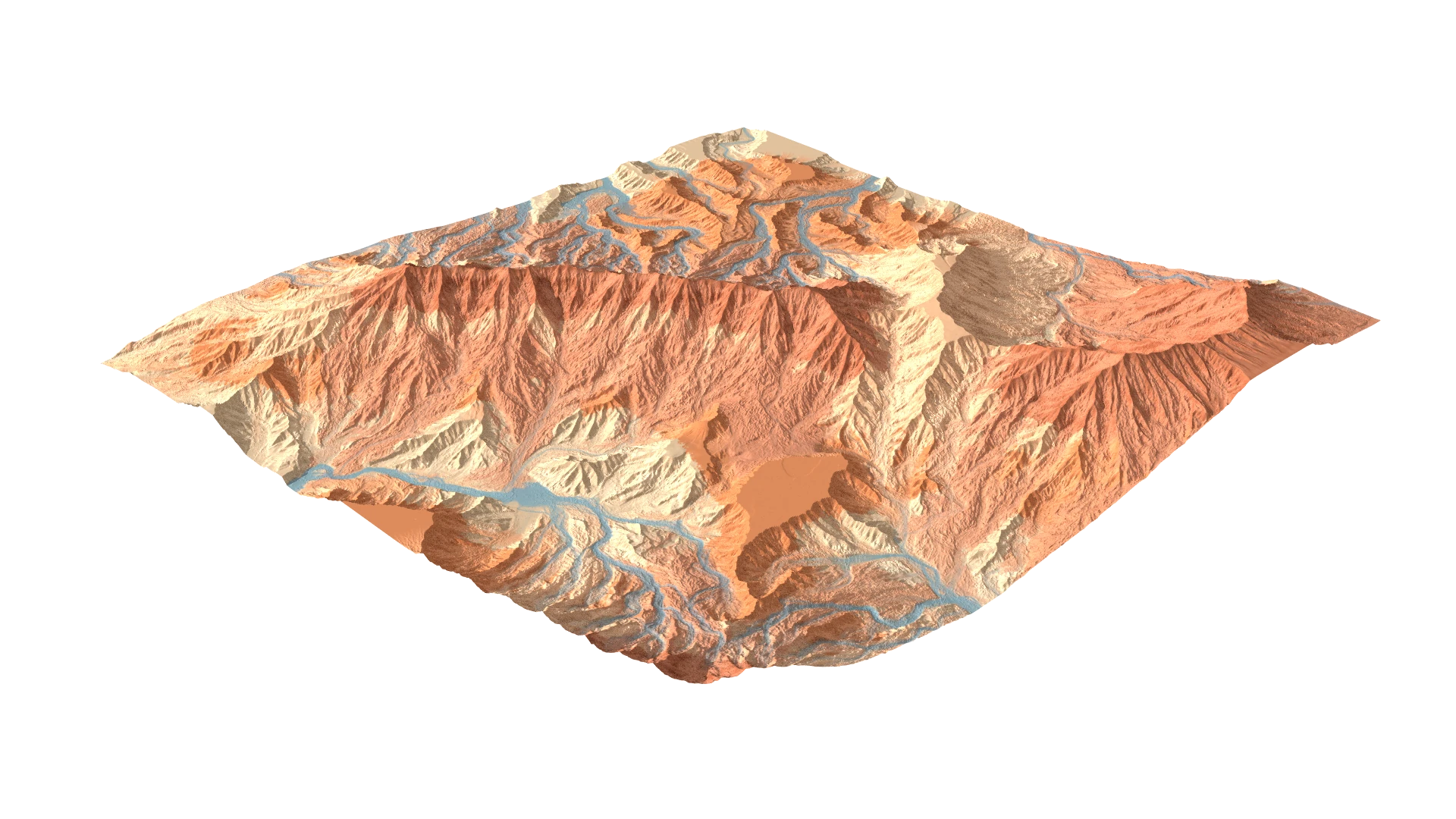
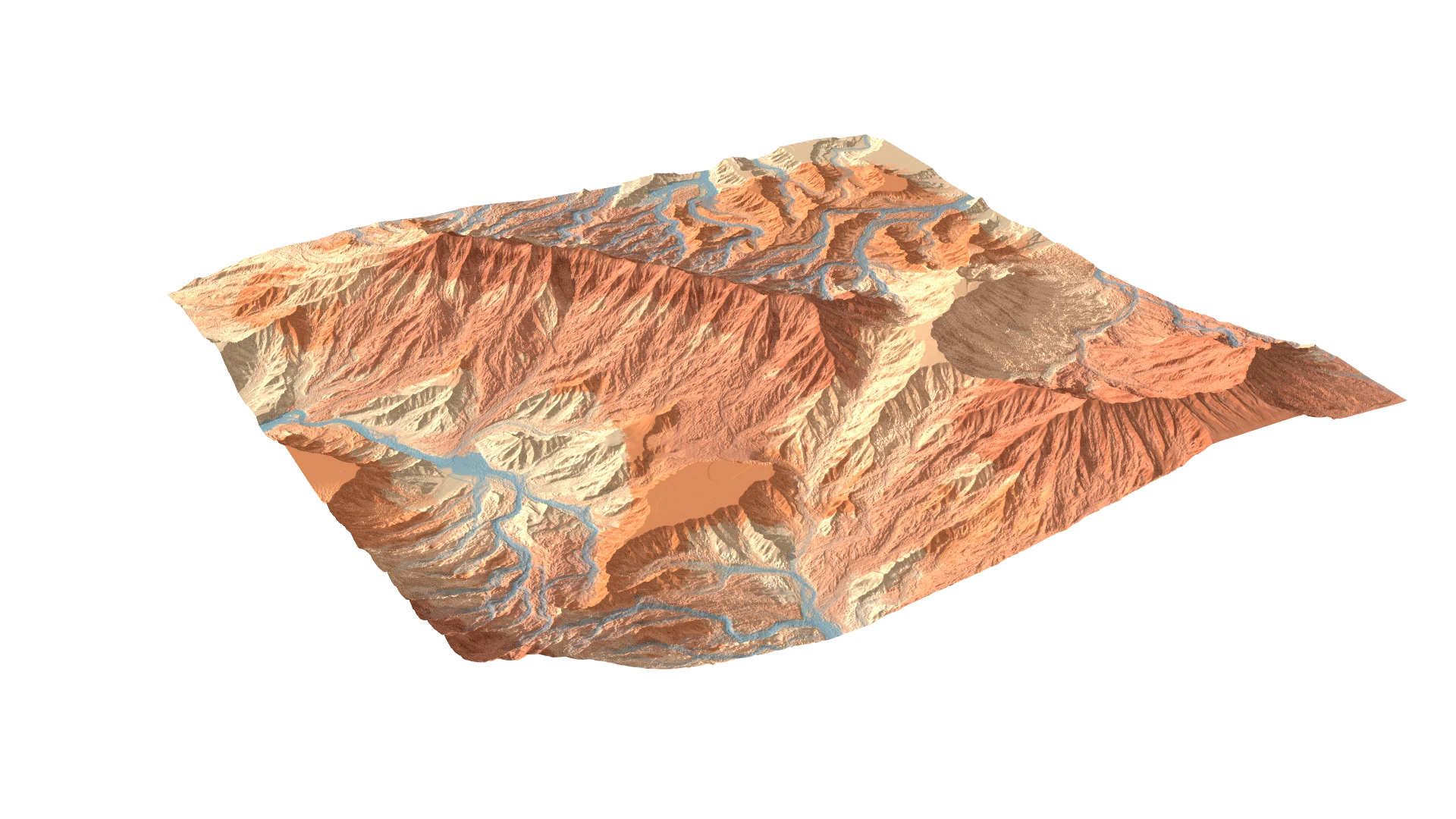
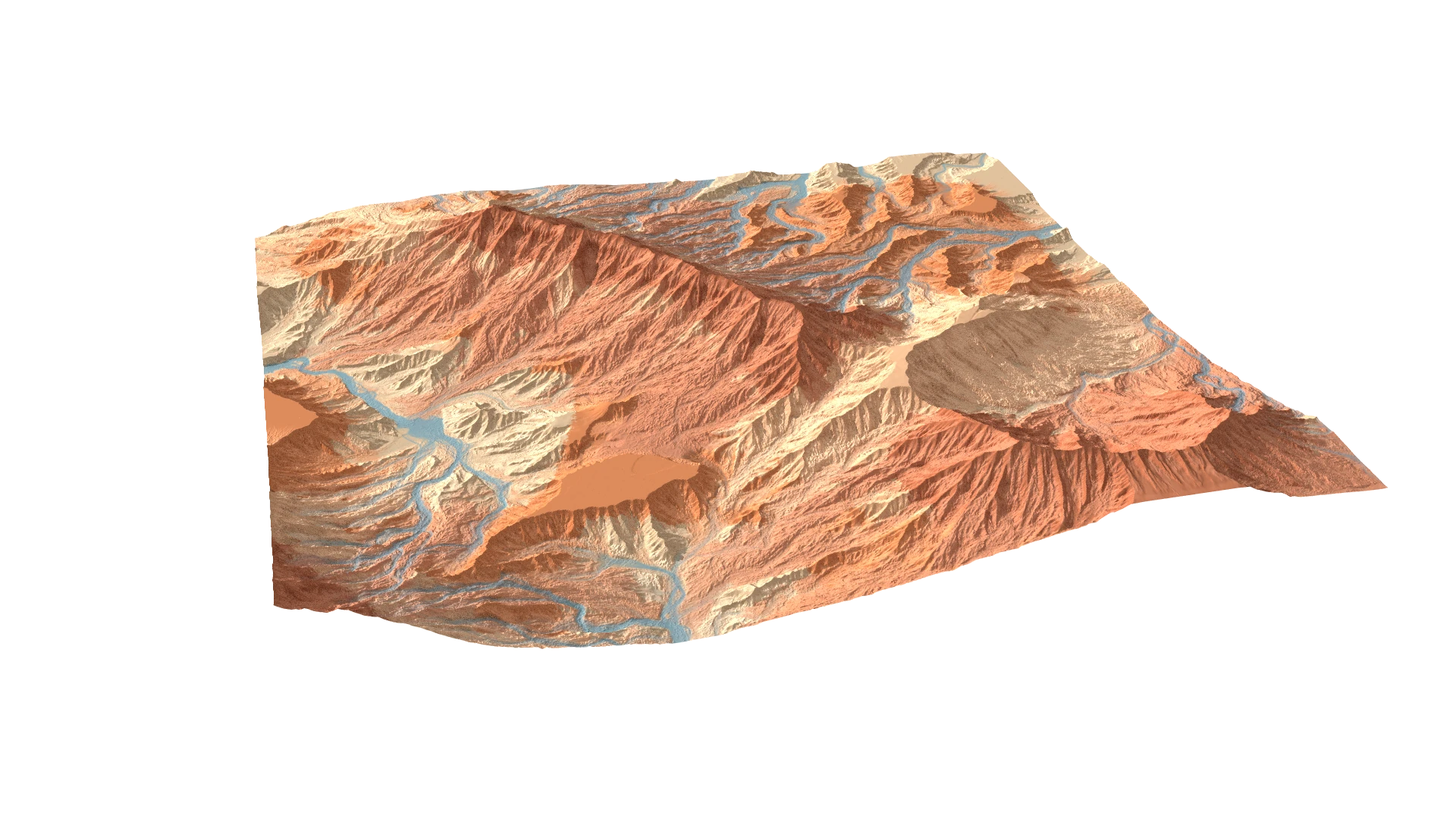
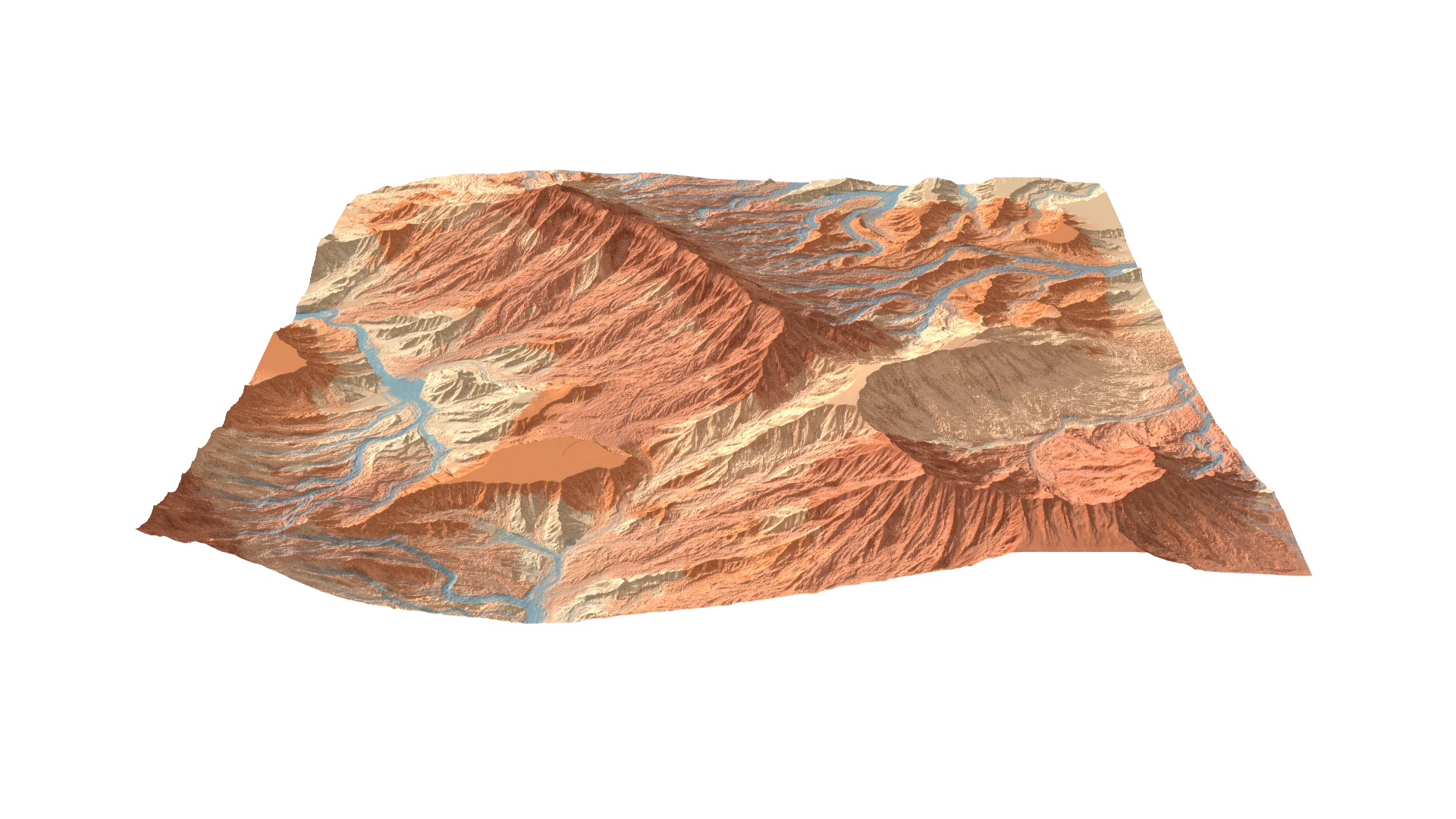
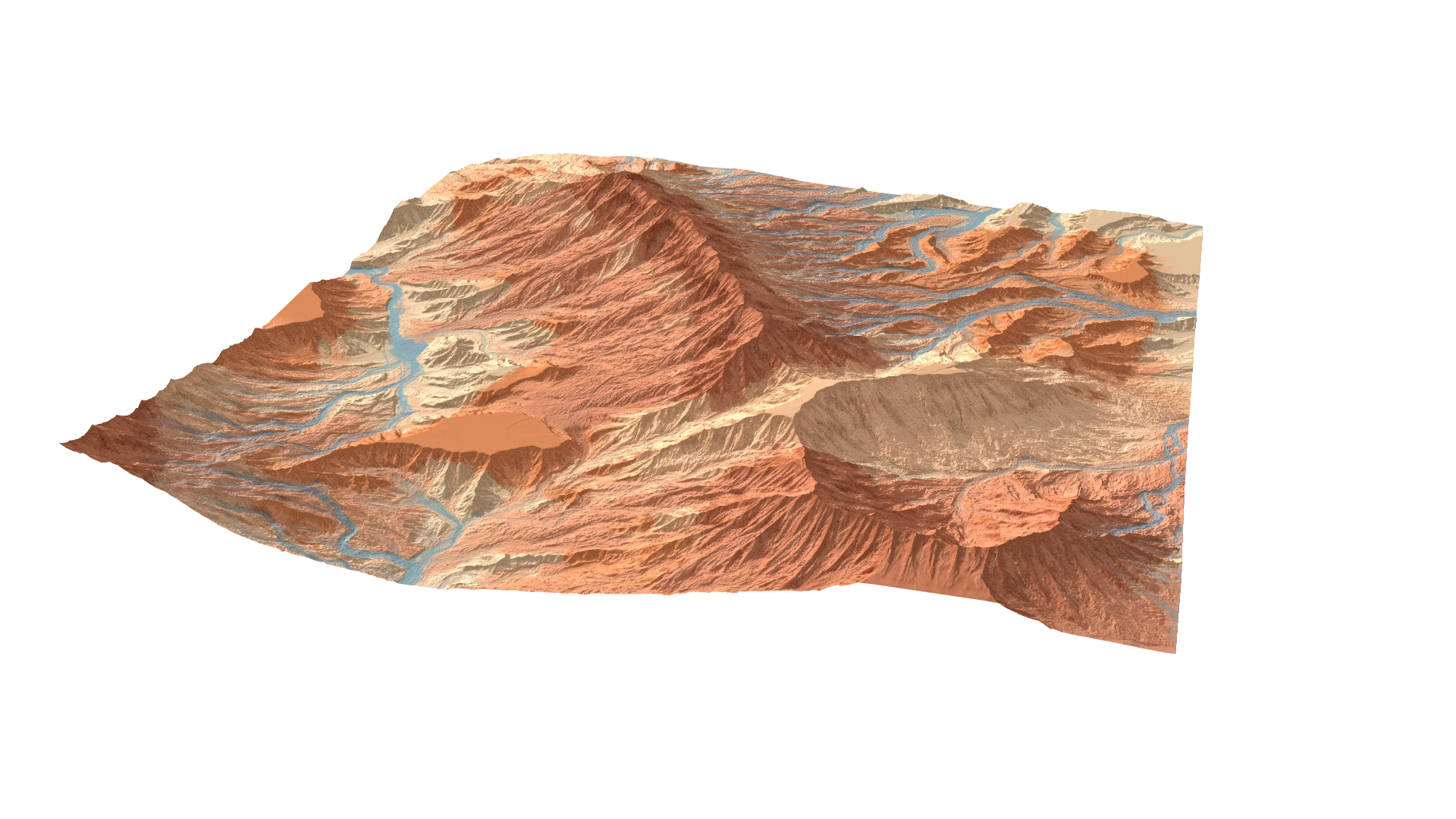
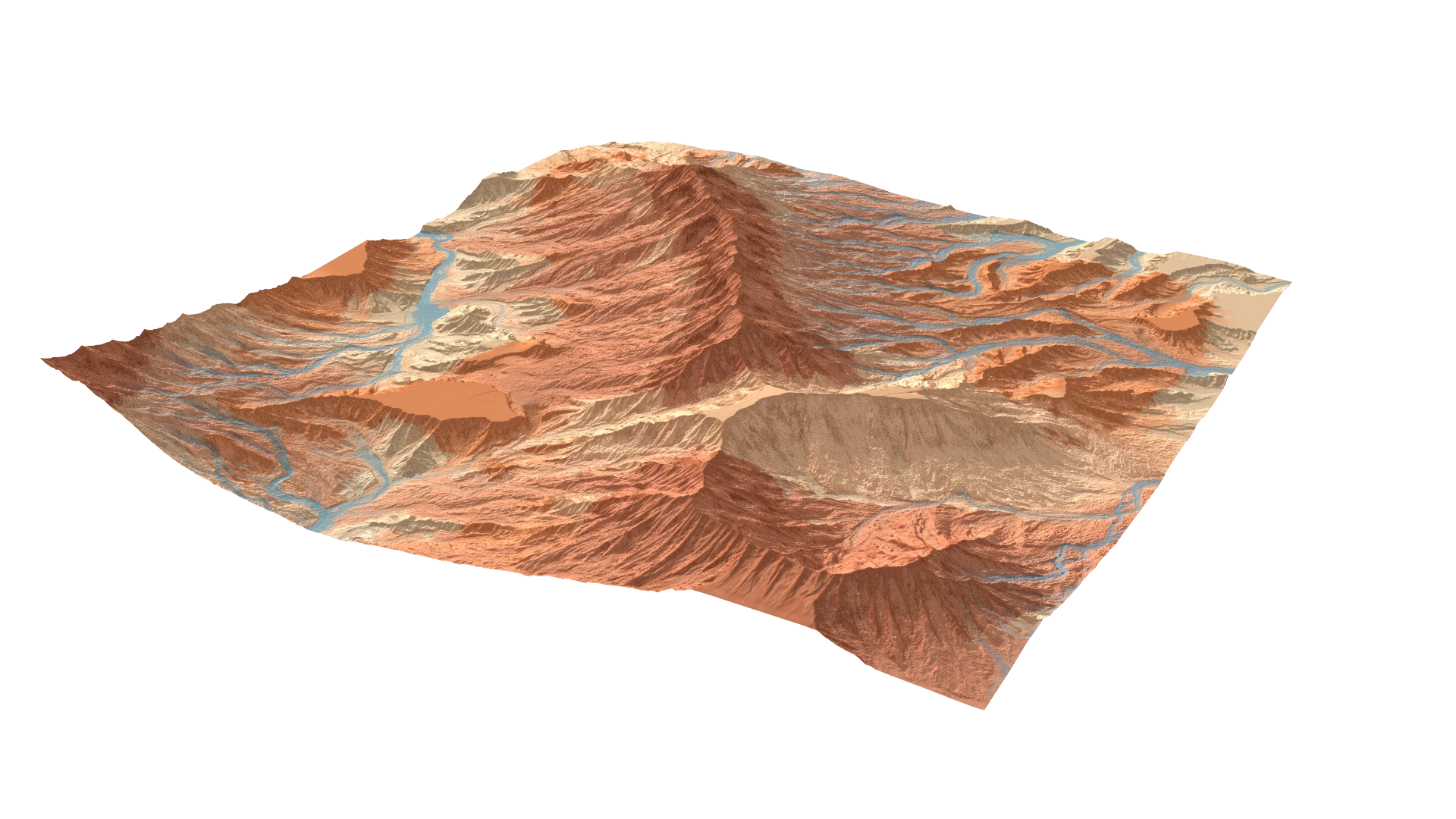
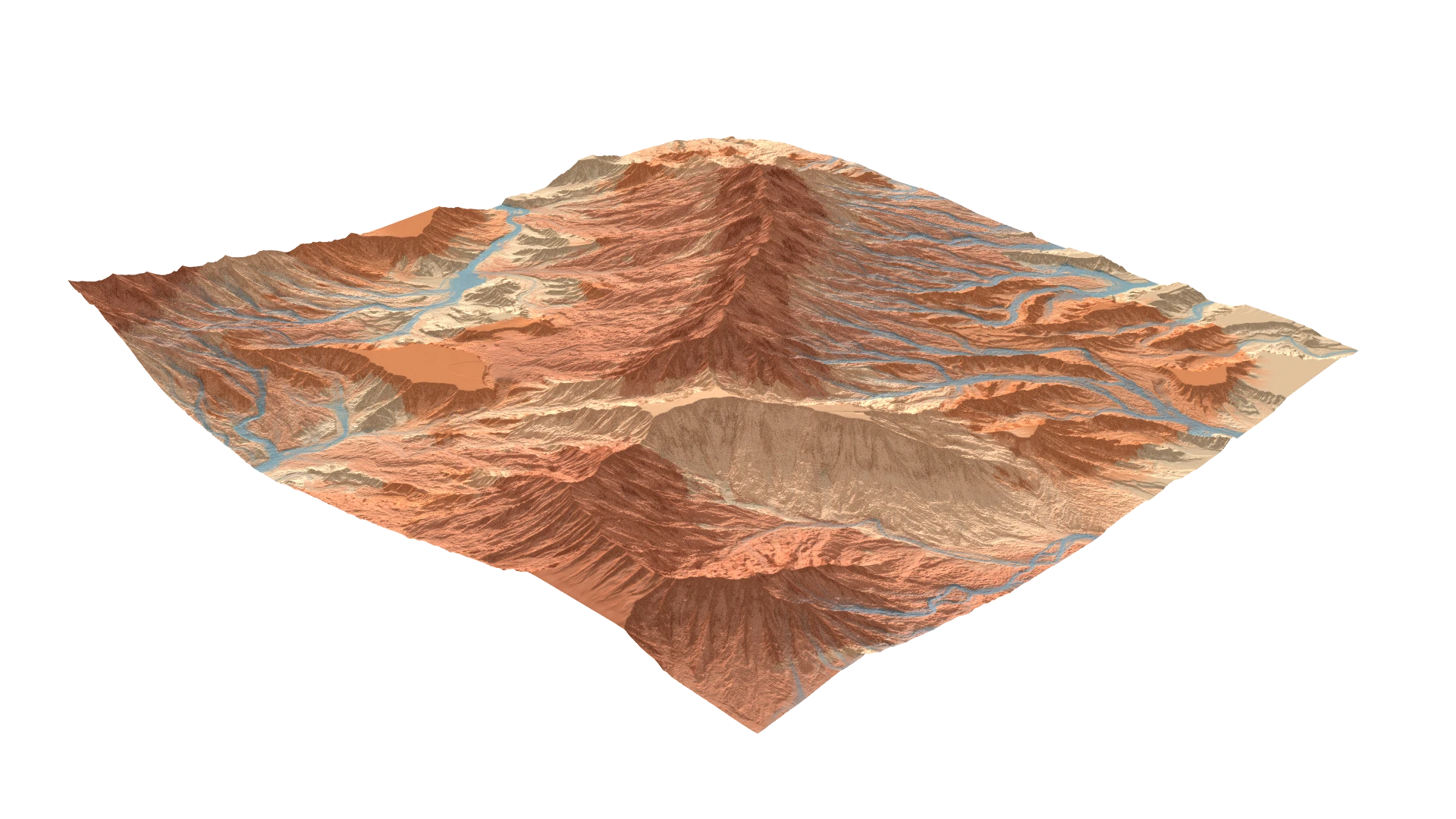
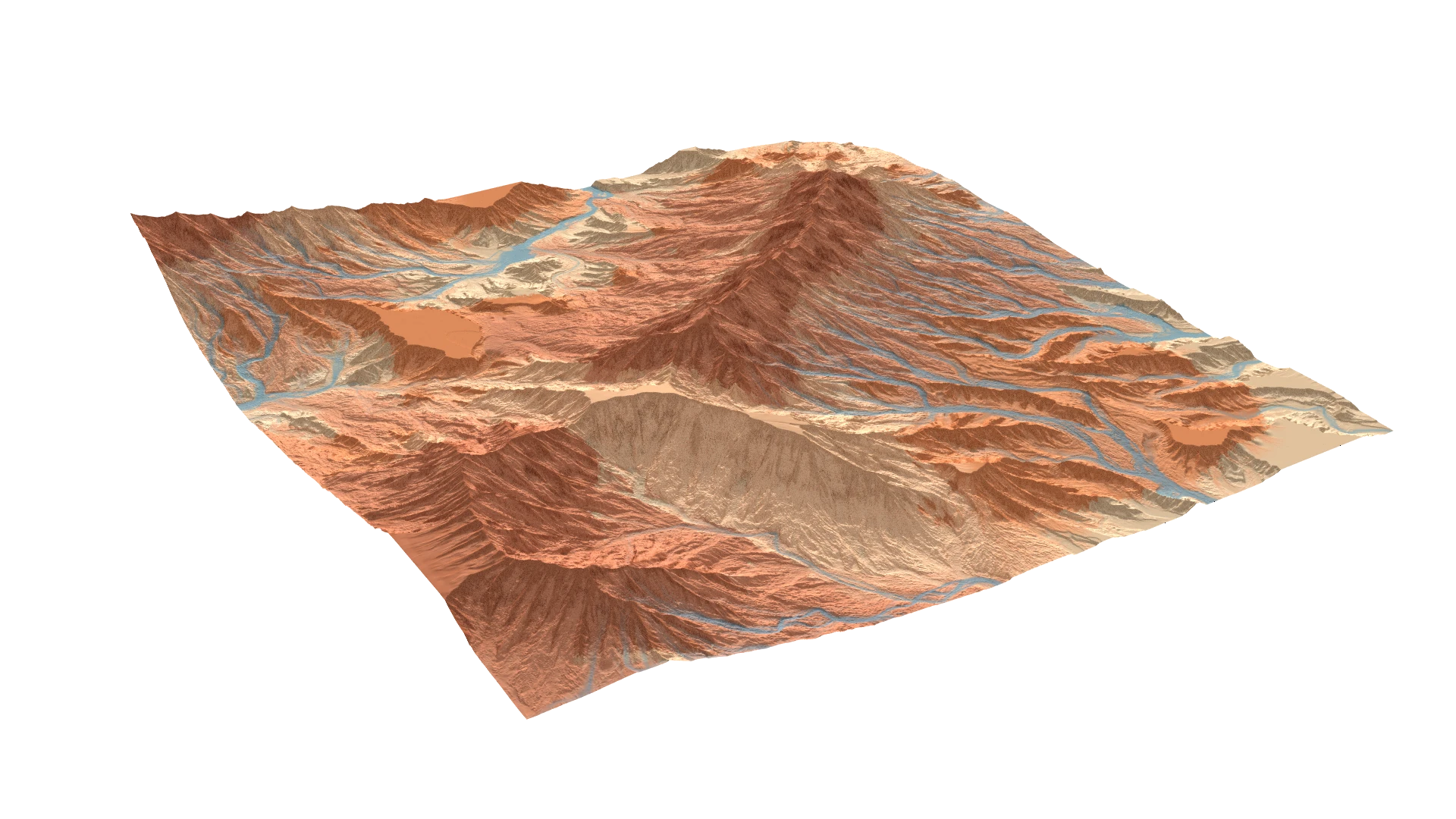
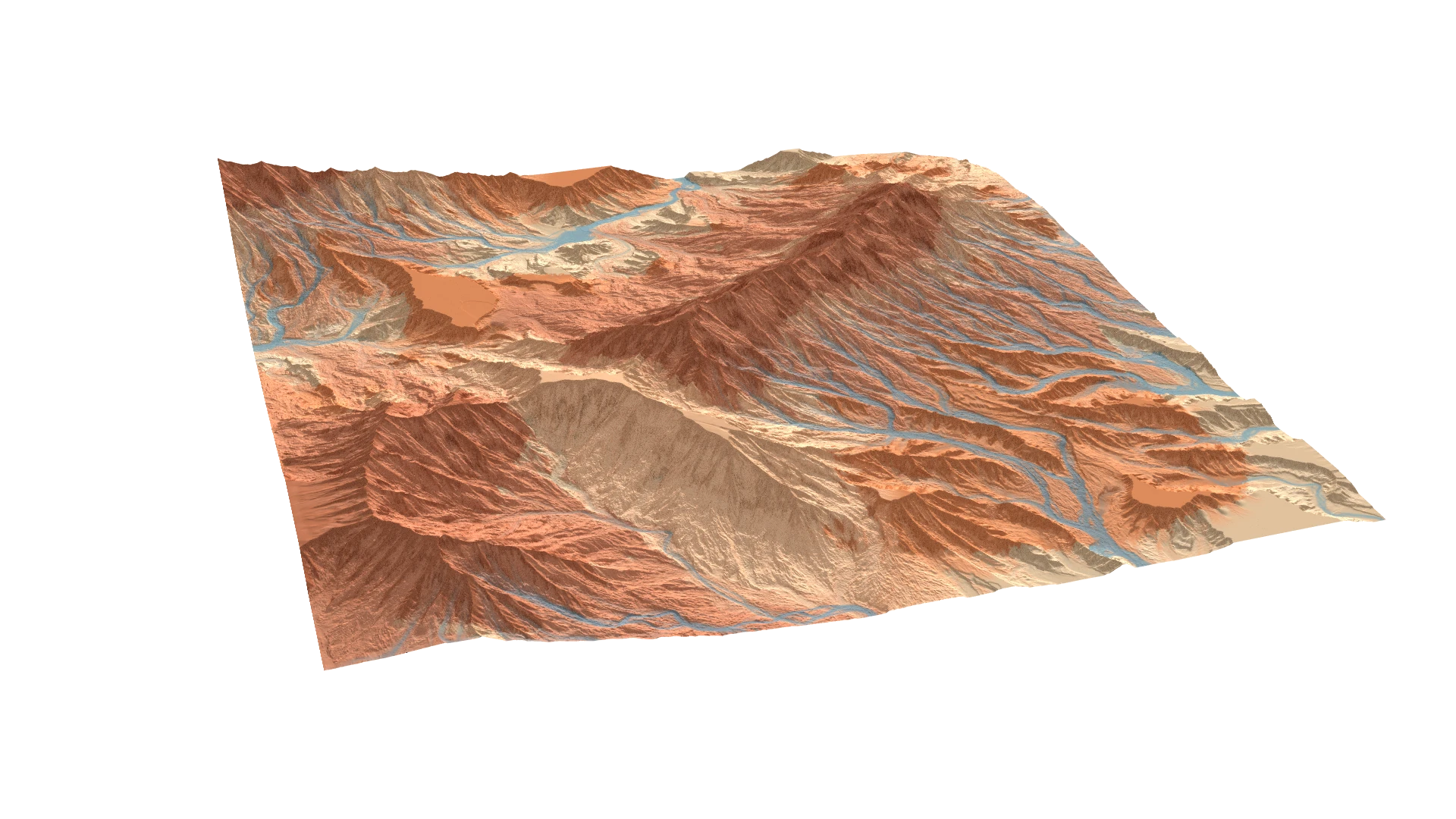
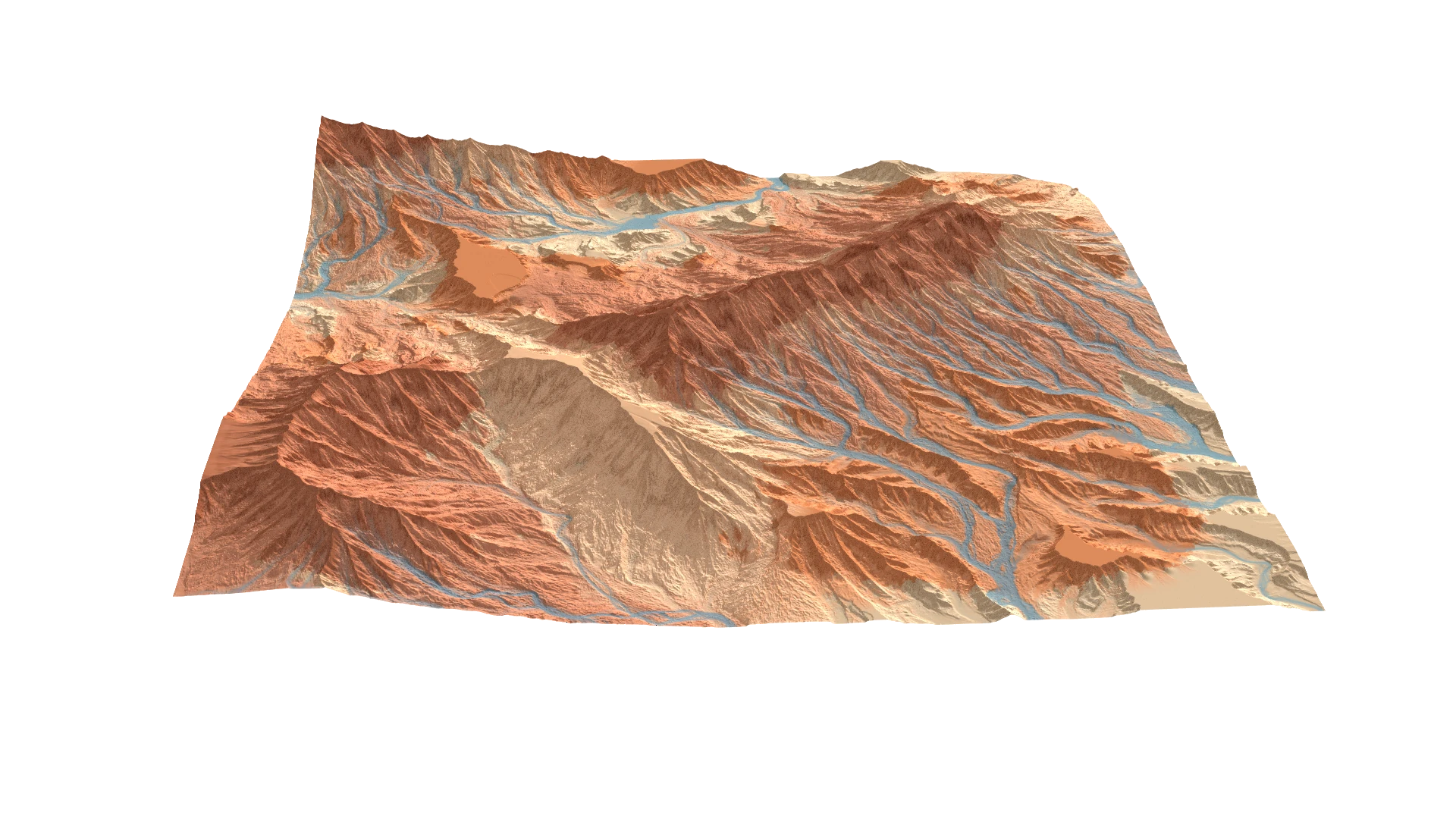
Figure 1: Our new algorithm for geomorphological transport models complex transports with momentum conservation for terrain erosion, resulting in the emergence of complex terrain features such as meanders, braided rivers and deltas, debris flow scars, and alluvial fans.
Abstract
Mountainous terrains evolve over geological timescales through erosion processes driven by the complex interplay of transported quantities such as water, sediment, and rockfall. A key challenge in erosion modeling is the simultaneous simulation of transport and erosive processes, which differ in temporal scales by several orders of magnitude. We address this challenge with a novel, parallel, stochastic point-based method capable of simulating transport over geological timescales. Our approach relaxes the strong assumptions on velocity required by prior works (e.g., based on the Stream Power Law), enabling a new erosion model grounded in a more general form of momentum conservation. We demonstrate that our scheme accurately solves the underlying conservation laws and avoids artifacts common in previous works. Furthermore, we show that our new erosion model captures multiscale geomorphological features, producing coherent basin structures and dynamic phenomena such as braided rivers, meanders, and deltas.
Video
Turntable
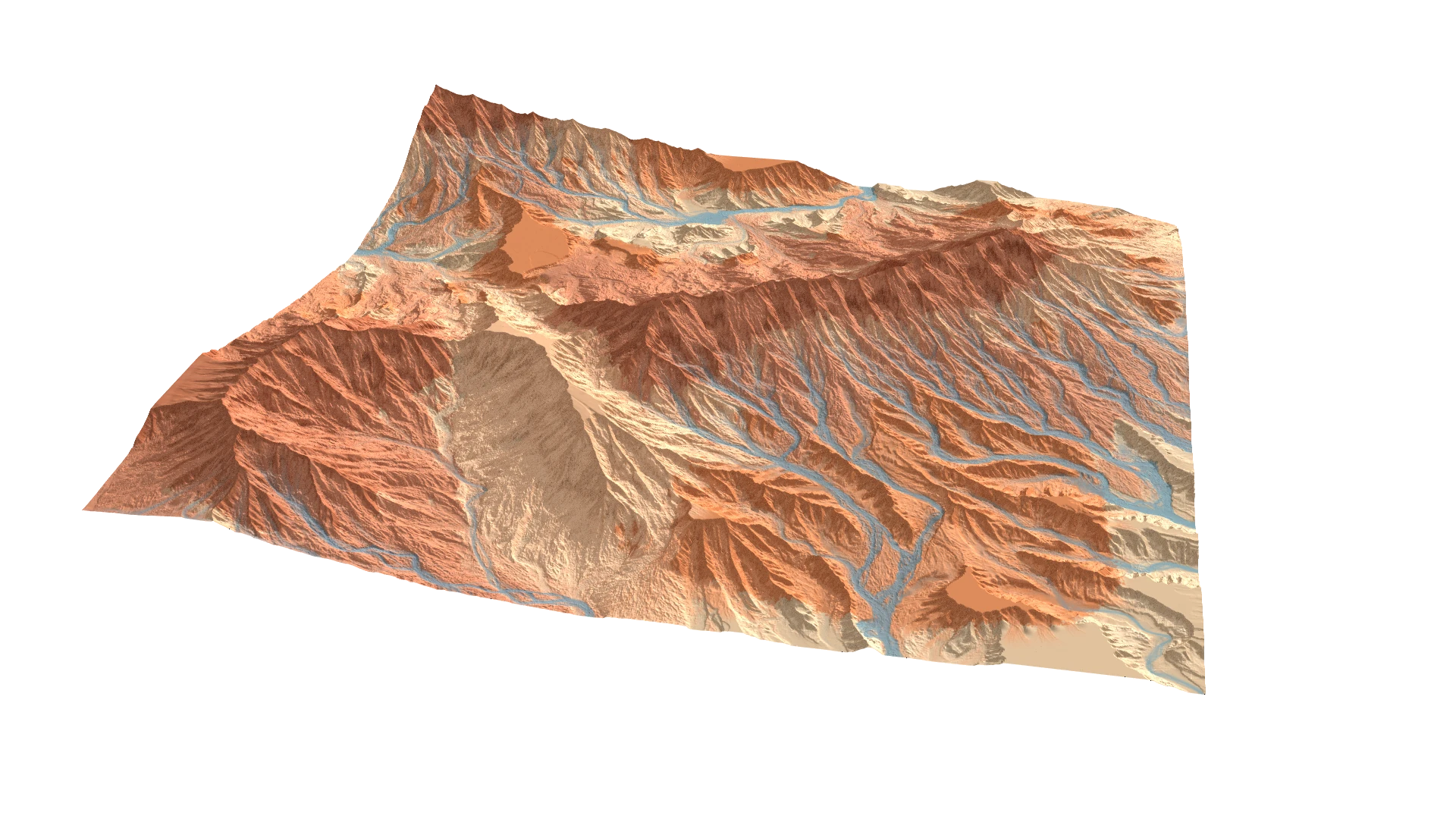
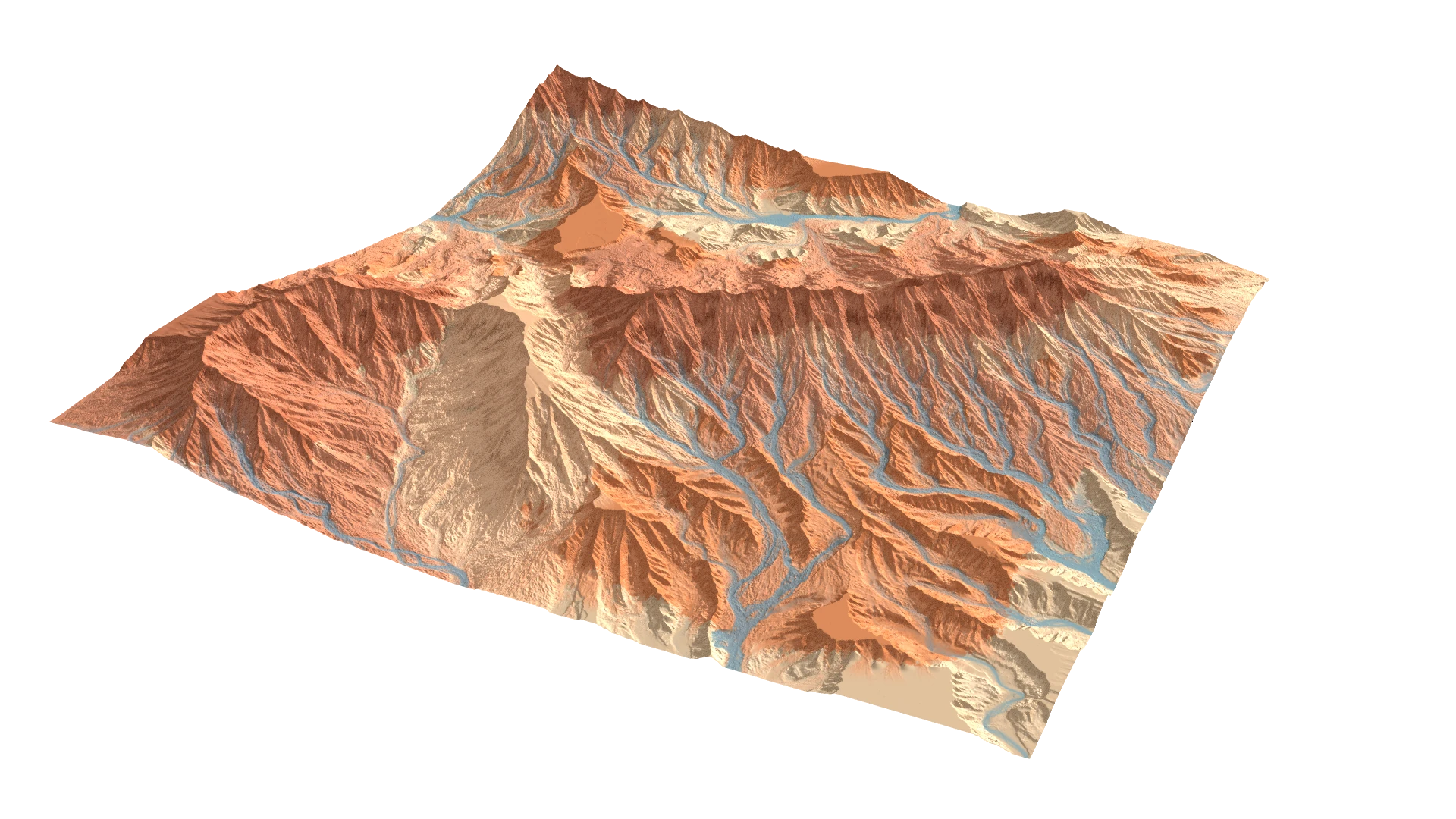
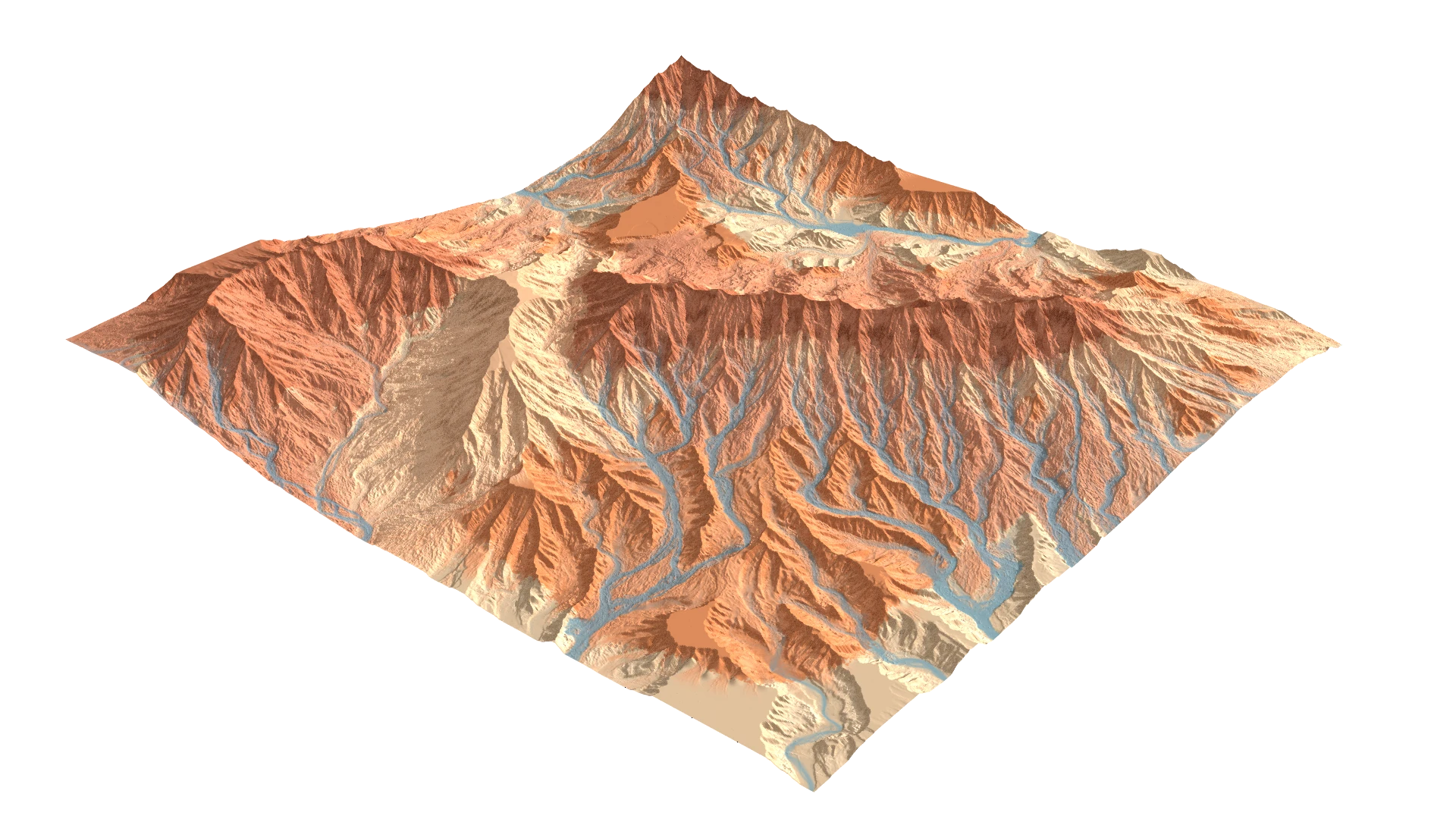
Figures
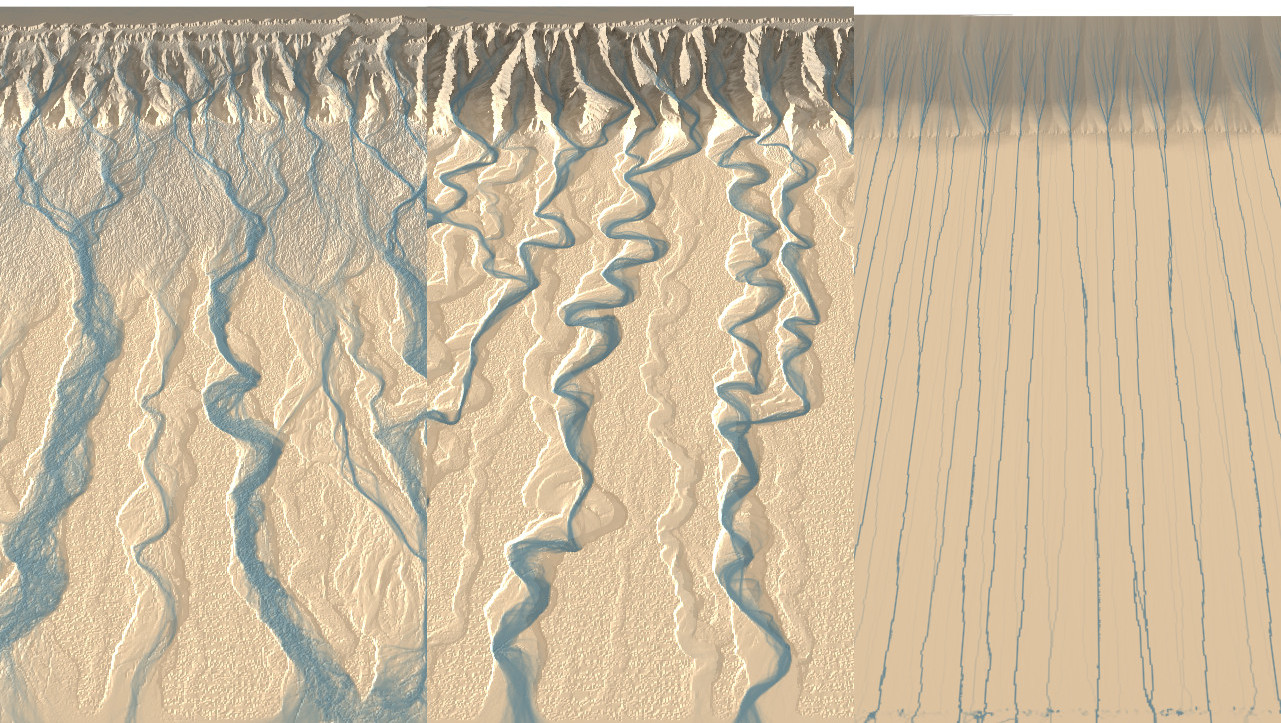
Figure 5: Fluvial erosion momentum ablation. Our model produces braided rivers and meanders (left). Decreased deposition reduces momentum instabilities, eliminating braided patterns (middle). Without momentum conservation, meanders disappear and streams have no width (right).
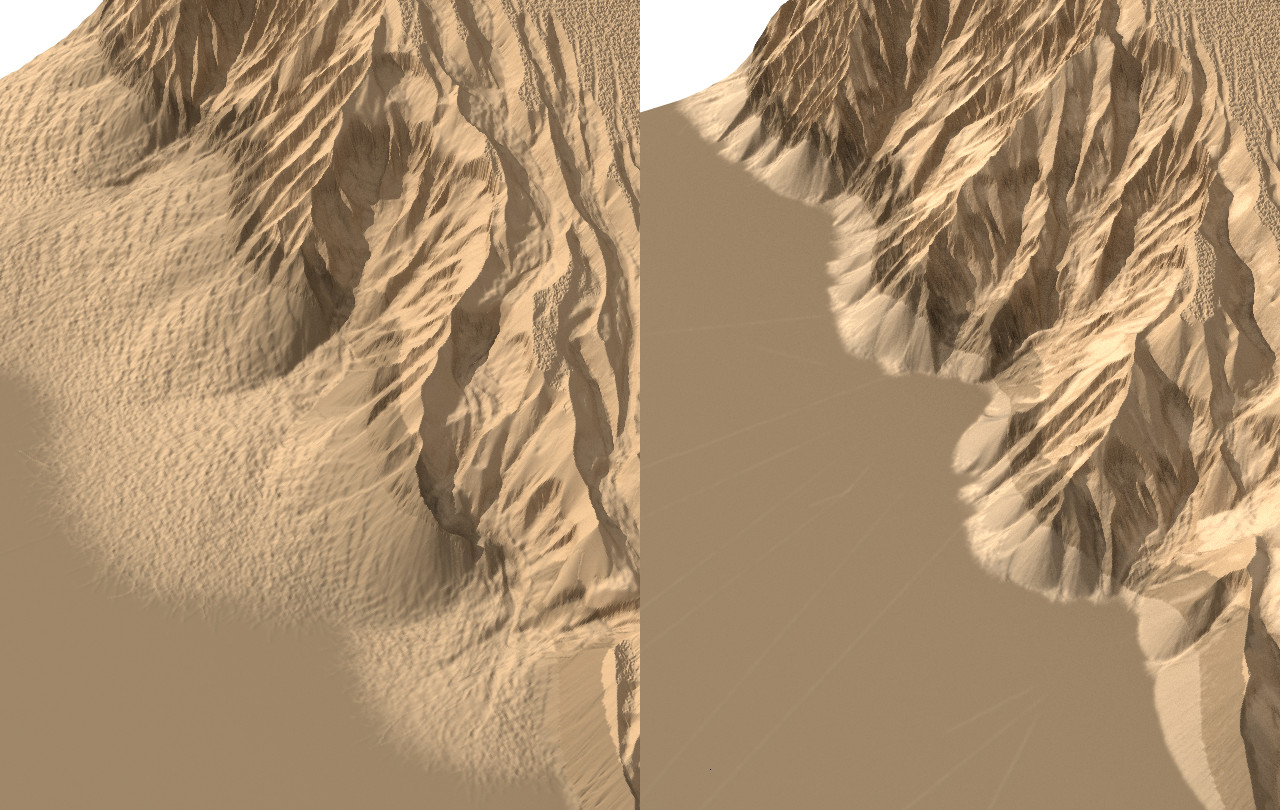
Figure 6: Debris flow momentum ablation. The full model (left) exhibits debris fans of varying slope and extent. In the absence of momentum conservation, deposits only form at a single fixed slope (right).
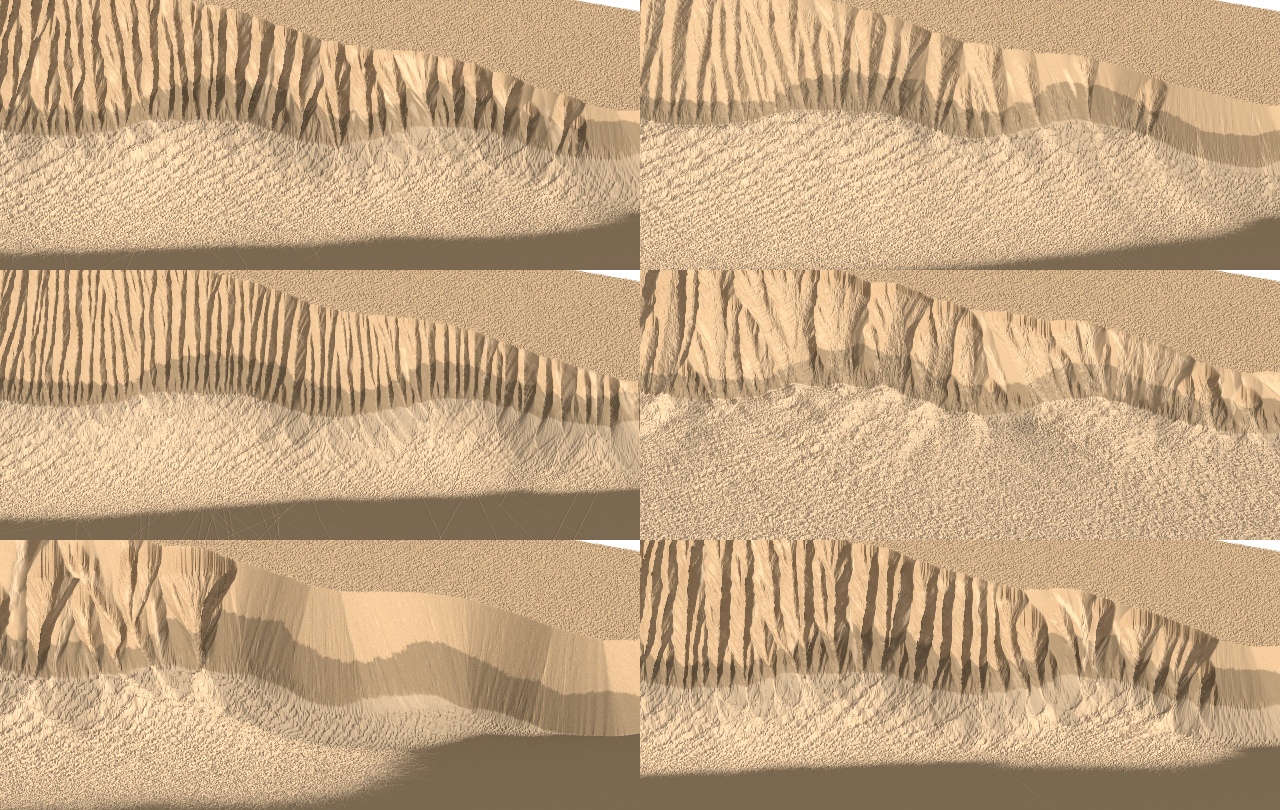
Figure 7: Debris flow parameter ablation. Clockwise from top-left: Baseline model, higher landslide erosion rate, higher debris erosion rate, higher debris deposition rate, higher debris yield stress and lower debris yield stress.
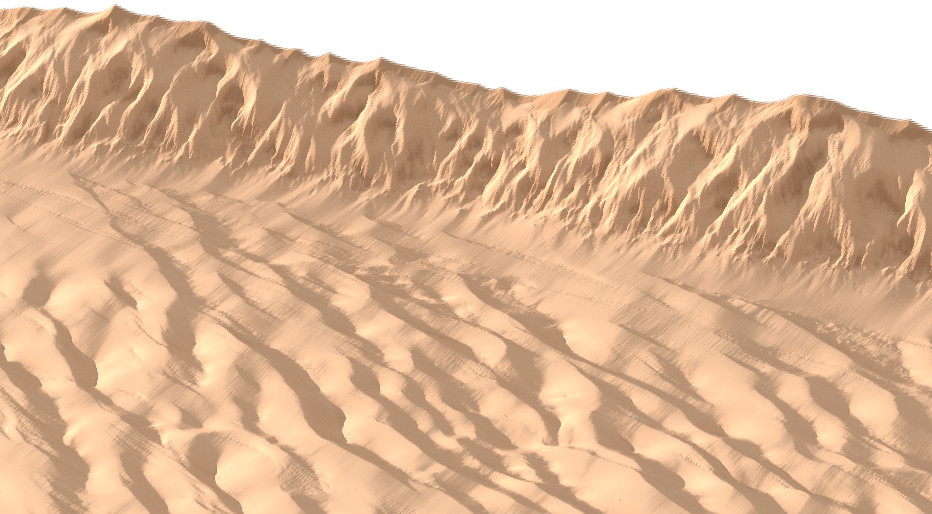
Figure 8: Effect of an arbitrary lateral force-field applied to the fluvial transport model. Without modifying the erosion model, we observe patterns of wind erosion and the formation of structures similar to dune fields.
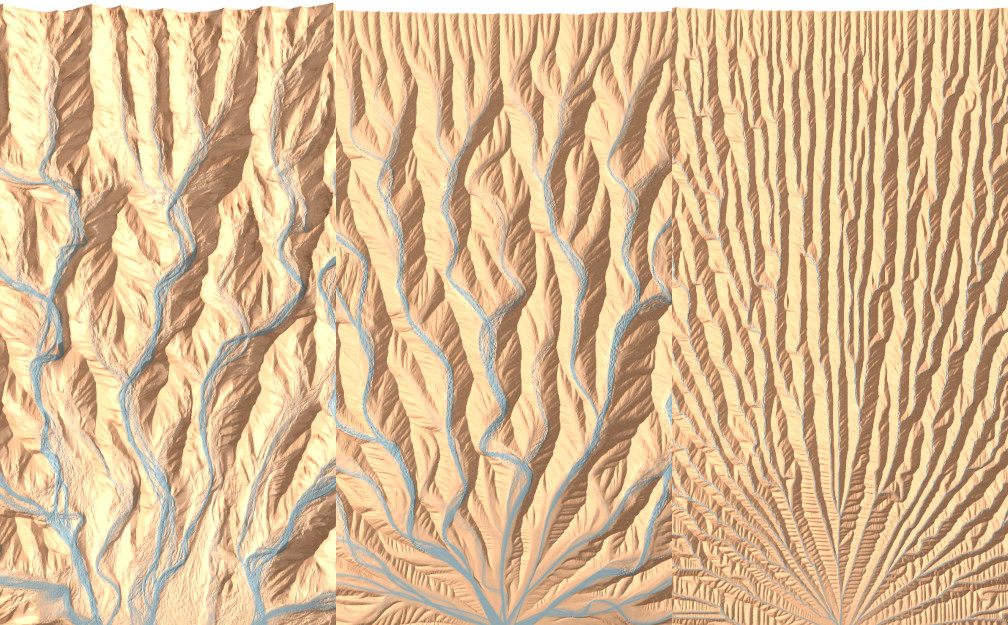
Figure 9: A comparison of our velocity-based erosion model (left) with stream power law (SPL)-based erosion. The SPL exhibits monotone erosive power between valleys and ridges and excessive erosion in valleys, decreasing variability and lowering the amount and quality of deposits (middle). Without momentum, this leads to visible directional artifacting (right).
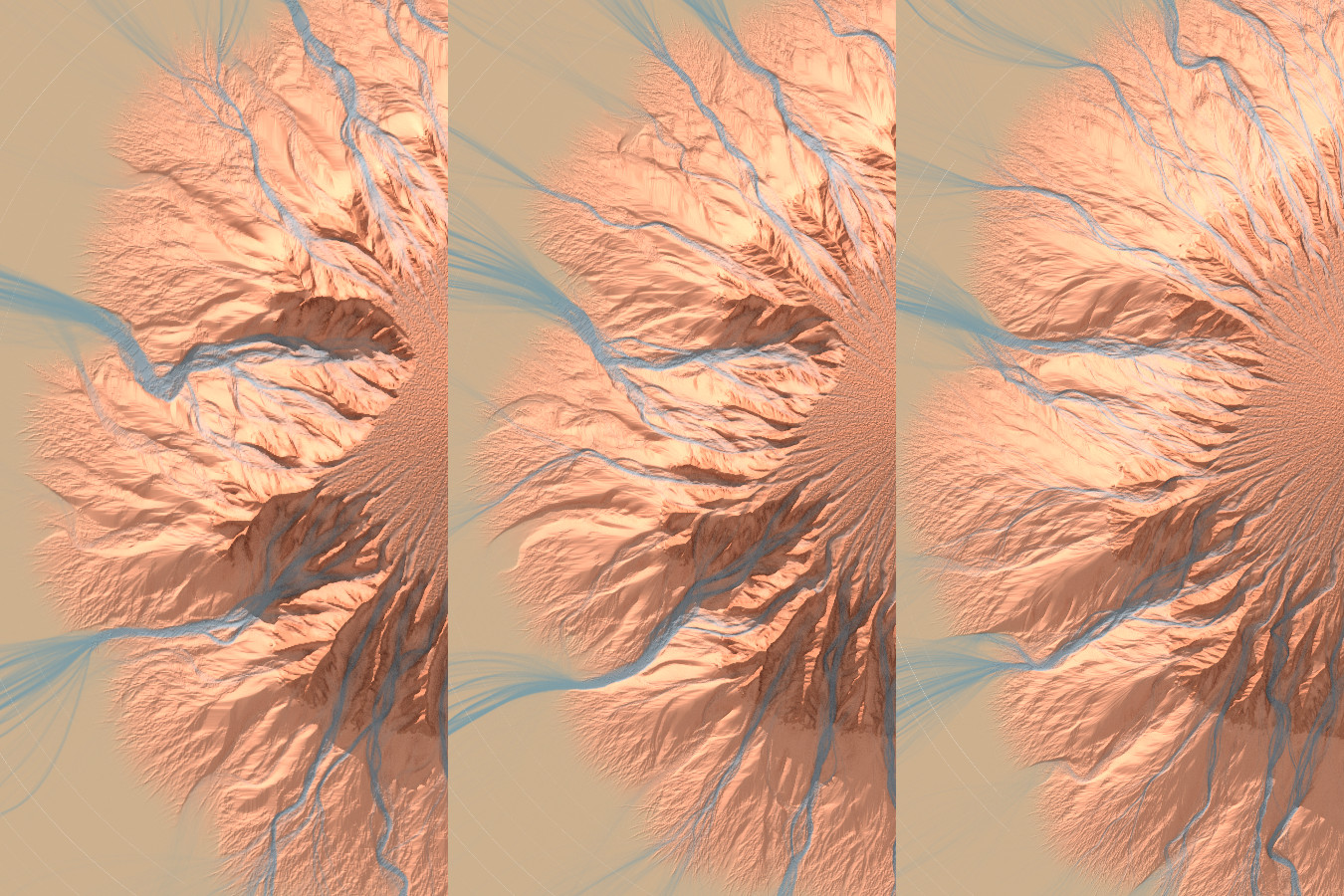
Figure 10: Resolution invariance of the model for three resolutions (left to right: 7682 px, 10242 px and 15362 px) at a constant sampling ratio of 0.125, simulated with the same initial and boundary conditions for 500 ky.
BibTex
@article{mcdonald2026stochastic,
author = {McDonald, Nicholas and Cordonnier, Guillaume},
title = {Stochastic geomorphological transport for terrain erosion simulation},
journal = {ACM Transactions on Graphics},
volume = {45},
number = {4},
pages = {78},
year = {2026},
doi = {10.1145/3811336}
}
Acknowledgement
This work was funded by the European Union, European Research Council (ERC) Advanced Grant NERPHYS, 101141721 and Agence Nationale de la Recherche ANR grant Invterra ANR-22-CE33-0012.